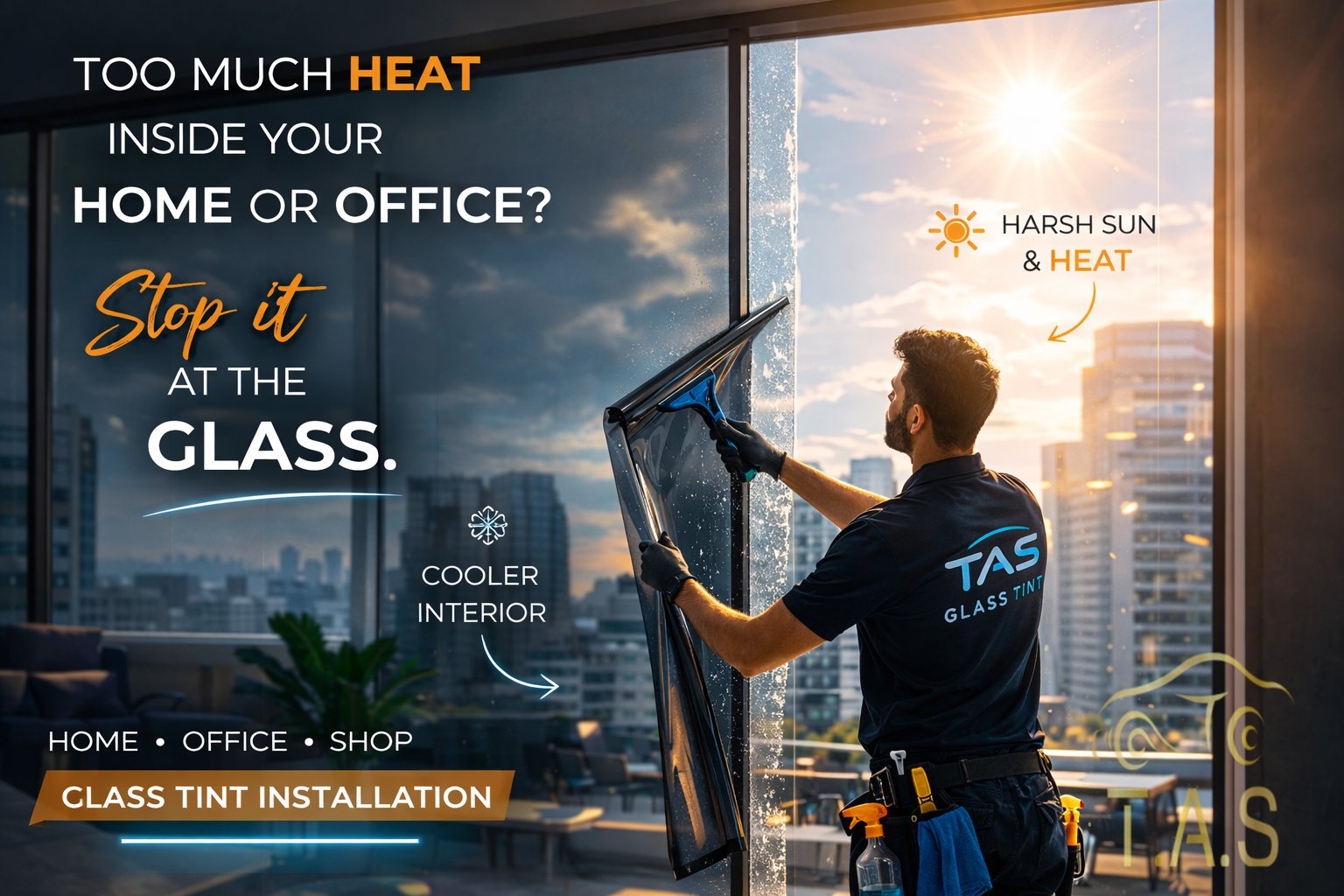
Building Glass Heat Rejection Film
Kerala's year-round sun turns glass-walled spaces into greenhouses — forcing AC units to run at maximum and driving electricity costs sky-high. Our architectural solar control film is applied directly to existing glass walls, partitions, shopfronts, and large windows. No glass replacement. No structural work. Just a measurable drop in indoor temperature, lower AC load, and a more comfortable space from day one. Custom-quoted per square foot. Contact us for a site assessment.
Complete Service Overview
The Problem With Glass Walls in Kerala
Glass looks modern and opens up a space. But in Kerala's climate — intense sun year-round, especially brutal from March to June and through the post-monsoon months — glass is a heat pump. West-facing and south-facing glass panels act like solar collectors, driving indoor temperatures up and forcing air conditioning systems into overdrive.
The consequences:
- Electricity bills that keep climbing — AC systems consuming maximum power to fight continuous heat gain through glass
- Spaces that never feel cool enough — even with the AC running, the radiant heat from sun-hit glass makes occupants uncomfortable
- Faded furniture, flooring, and merchandise — UV passing through untreated glass degrades upholstery, carpets, wooden floors, signage, and display items over months
- Glare on screens and workspaces — direct sun on office desks and showroom displays causes eye strain and makes digital screens difficult to read
- Wasted energy — money spent cooling a space where the heat source is never addressed at its origin
Solar control window film addresses all of this at the glass itself — the only point where heat can be practically intercepted.
Who This Service Is For
Automobile & Retail Showrooms
Glass frontage is a showroom's identity — but west-facing glass turns the display floor into a greenhouse by afternoon. Merchandise and displayed vehicles exposed to direct UV fade and degrade faster. Customers and staff are uncomfortable. Film reduces the heat load without compromising the glass aesthetic or blocking the view of what's on display.
Offices with Glass Partitions or Curtain Walls
Open-plan offices and corporate spaces with glass walls look great but concentrate solar heat on workstations. Staff productivity drops in hot, glare-heavy environments. Film reduces the temperature at glass-side desks, cuts glare on monitors, and brings down the AC load across the floor.
Retail Shops and Commercial Spaces
Any shop with sun-facing glass puts customers and staff in direct heat. Merchandise near glass windows fades from UV exposure. Film is applied quickly with minimal disruption and immediately improves comfort and product protection.
Modern Homes, Villas, and Apartments
Floor-to-ceiling windows and glass walls are common in newer Kerala homes and high-rise apartments — especially in premium construction. Bedrooms and living rooms with west-facing glass are the worst affected. Film keeps rooms cooler in the evenings without blocking daylight, reducing reliance on AC and making the space livable through summer months.
High-Rise Buildings and Commercial Complexes
Buildings with large glass facades across multiple floors benefit significantly from film — the cumulative reduction in solar heat gain across all glass panels measurably reduces the building's overall cooling energy requirement.
How Solar Control Film Works
The film is applied to the interior surface of the glass. It uses nano-ceramic or dyed/metallic technology to selectively block the infrared (heat) and UV portions of the solar spectrum while allowing visible light to pass through. The result is a room that receives daylight normally but stops absorbing solar heat through the glass.
- Solar control film: strong heat and UV rejection, cost-effective, 5–8 year durability
- Ceramic heat rejection film: maximum performance at any given light transmission level, minimal color shift, 8–12 year durability — recommended for showrooms and premium commercial spaces
How to Get a Quote
Every project is different — glass area, orientation, height, and access all affect scope. Contact us with your building type and a rough glass area, and we'll visit the site, assess the glass, and provide a written per-square-foot quote with no obligation.
Common Questions
Why does my glass-walled office or showroom get so hot even with AC running?
Standard flat glass transmits most of the solar energy that hits it — visible light, UV, and infrared heat. In Kerala's climate, west or south-facing glass walls can contribute a large proportion of your indoor heat load. Your AC is trying to compensate for heat entering continuously through the glass, which is why it runs constantly without making the space feel comfortable. Solar control film is applied to the glass surface and intercepts that heat before it enters the room — reducing the load on your AC at the source.
How much will it reduce indoor temperature?
The reduction depends on glass orientation, film grade, and how much of the heat load is coming through glass versus other sources. Spaces with large west or south-facing glass panels — showrooms, glass-partitioned offices, modern homes with glass walls — typically see a noticeable temperature improvement. Most clients also report their AC running less frequently after installation. We assess your specific space before recommending a film grade.
Will my electricity bill actually go down?
If a meaningful portion of your current AC load is driven by solar heat gain through glass, yes — reducing that heat gain at the source means your AC works less to maintain the same temperature. The improvement is most significant in spaces with large direct-sun-facing glass. We cannot guarantee a specific saving percentage as it depends on your building, glass area, and current AC setup, but reduced AC runtime after installation is consistently reported by building clients.
Will the film make my space dark?
No — solar control film is not a blackout film. Films are available in a wide range of VLT (Visible Light Transmission) values. Ceramic and high-performance solar films can reject significant heat while still transmitting good natural light — the space looks and feels similar, just cooler. We select the right VLT based on your comfort, aesthetic, and lighting preferences.
Who needs building glass heat rejection film most?
Anyone with glass walls, large windows, or glass partitions that face west or south in Kerala's climate. The biggest gains are seen in automobile showrooms and retail showrooms with glass frontage, open-plan offices with glass curtain walls or partitions, modern homes and villas with floor-to-ceiling or glass wall construction, retail shops where customers and merchandise are exposed to direct sun, and high-rise apartments or commercial buildings with large glass facades.
Is this different from car window tinting?
Yes — completely different product and process. Architectural film is manufactured in wider rolls for flat glass panels and is tested for building-scale UV and thermal performance. Car window tinting is designed for curved automotive glass with legal VLT requirements. There are no VLT legal restrictions for building glass. We use architectural-grade film specifically designed for building applications.
Does it work on glass partitions inside buildings?
Yes. Interior glass partitions — especially those separating sun-facing rooms from interior workspaces — can be filmed. It reduces both the heat and glare that passes through from sun-lit areas into the rest of the building.
How long does the film last?
A professional solar control film on building glass typically lasts 5–8 years. Ceramic-grade architectural film can last 8–12 years under normal conditions. Longevity depends on glass orientation, cleaning methods used, and whether furniture or objects regularly contact the glass surface.
How do you price building glass film projects?
Pricing is per square foot of glass area and depends on the film grade selected and site specifics (height, access, glass condition). We visit the site or review your measurements and provide a written quote before any work begins. There is no obligation — contact us with your building type and approximate glass area for an initial discussion.
Can film be applied to tinted or double-glazed glass?
In most cases yes — film is applied to the interior surface of the glass. We inspect the glass type and condition during the site visit to confirm compatibility and recommend the appropriate film for your existing glass specification.
Related Services

Ready to Protect Your Car?
Get a personalized quote and expert advice for building glass heat rejection film.