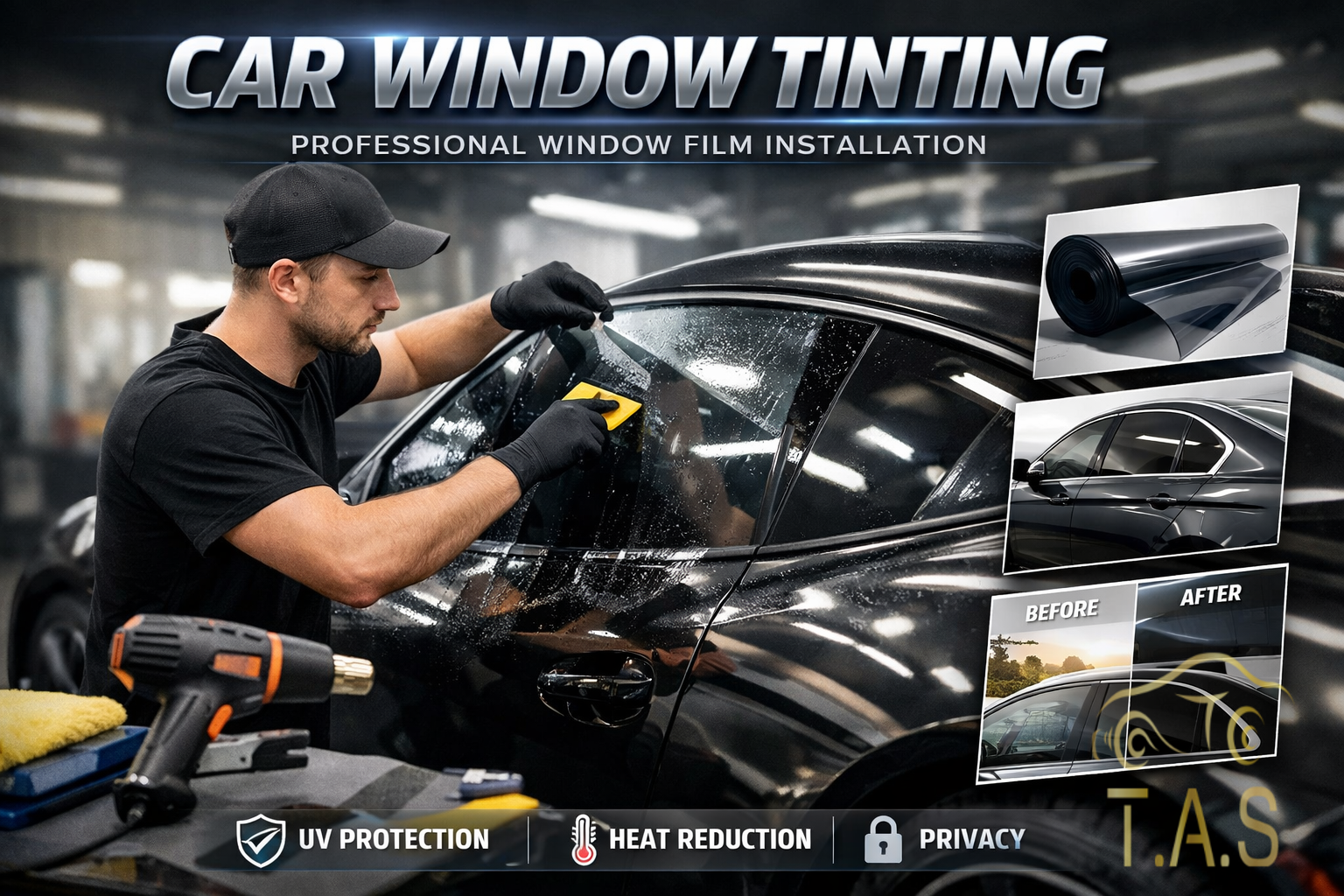
Car Window Tinting (Sun Film)
Premium car window tinting service focused on legal VLT compliance, measurable heat rejection (TSER), and long-term optical clarity.
Tailored Packages for Every Need
Basic Budget Film
- Dyed/economy class film
- Approx. TSER around 30%
- High UV rejection
- Entry-level heat and glare control
Advanced Heat Rejection (Intermediate)
- High heat rejection non-metallic film
- Approx. TSER around 40-45%
- High IR rejection performance tier
- Better daytime comfort vs budget films
Ceramic Heat Rejection Film
- Nano-ceramic heat rejection film
- TSER 50%+ on select premium models
- High UV rejection
- Strong IR rejection (model dependent)
- High clarity with low signal interference
- Up to 10-year warranty on select premium films
Note: Package details, features, pricing, and availability are subject to change. Please contact us directly to confirm the latest inclusions, pricing, and slot availability before booking.
Booking note: Prior booking is required for this service. Please contact us in advance to confirm availability and reserve a slot.
Complete Service Overview
Car Window Tinting in India: What You Should Know First
For most car owners, the goal is simple: reduce heat, cut glare, and protect the cabin without compromising visibility. Good window tinting should be measured by performance data, not just darkness.
The commonly referenced CMVR (Central Motor Vehicles Rules) visibility thresholds are:
- Front and rear windscreen glass: minimum 70% VLT
- Side glass: minimum 50% VLT
VLT means Visible Light Transmission. In practice, always verify current enforcement with local authorities because legal interpretation and checks can vary by region.
Why Heat Rejection Numbers Matter More Than Dark Shade
Many low-cost films look dark but offer poor thermal performance. Darkness alone does not guarantee cooling.
For practical performance, evaluate:
- UV Rejection: Helps reduce UV exposure and interior fading.
- IR Rejection: Targets infrared heat; useful, but test ranges can differ across brands.
- TSER (Total Solar Energy Rejected): Most complete indicator for overall heat control, because it factors visible, IR, and UV portions together.
When comparing films with similar VLT, the one with higher TSER will often feel cooler in daily driving.
If you want a plain-language explanation of the biggest misconceptions buyers run into, read our guide: 5 Common Sun Film Myths Debunked
Film Variant Guide
1. Ceramic Heat Rejection Film
Ceramic window films are built for high heat rejection with better optical clarity and improved long-term stability versus basic dyed films. Based on current premium-category product positioning, typical strengths include high UV rejection, strong IR control, and signal-friendly behavior due to non-metallic construction.
Best for: drivers who want maximum comfort, cleaner visibility, and long-term performance.
2. Value / Dyed Sun Film
Dyed films are usually an affordable entry point for glare and privacy improvement. They can offer decent optical comfort but generally lower heat rejection than premium ceramic constructions. Quality, adhesive stability, and fade resistance vary by product line, so trusted brand and installer quality make a big difference.
Best for: budget-conscious users prioritizing basic glare control and entry-level heat reduction.
3. Metalized Film
Metalized films use a metalized layer to reflect part of the incoming solar energy. They can offer decent heat rejection and durability, but the metal content is also the reason they are a poor fit for most modern cars.
Best for: niche use cases where signal compatibility is not important.
Important: We do not recommend metalized film for cars because it can interfere with GPS, FASTag, mobile reception, and other signal-dependent systems.
3. Safety Glazing Film
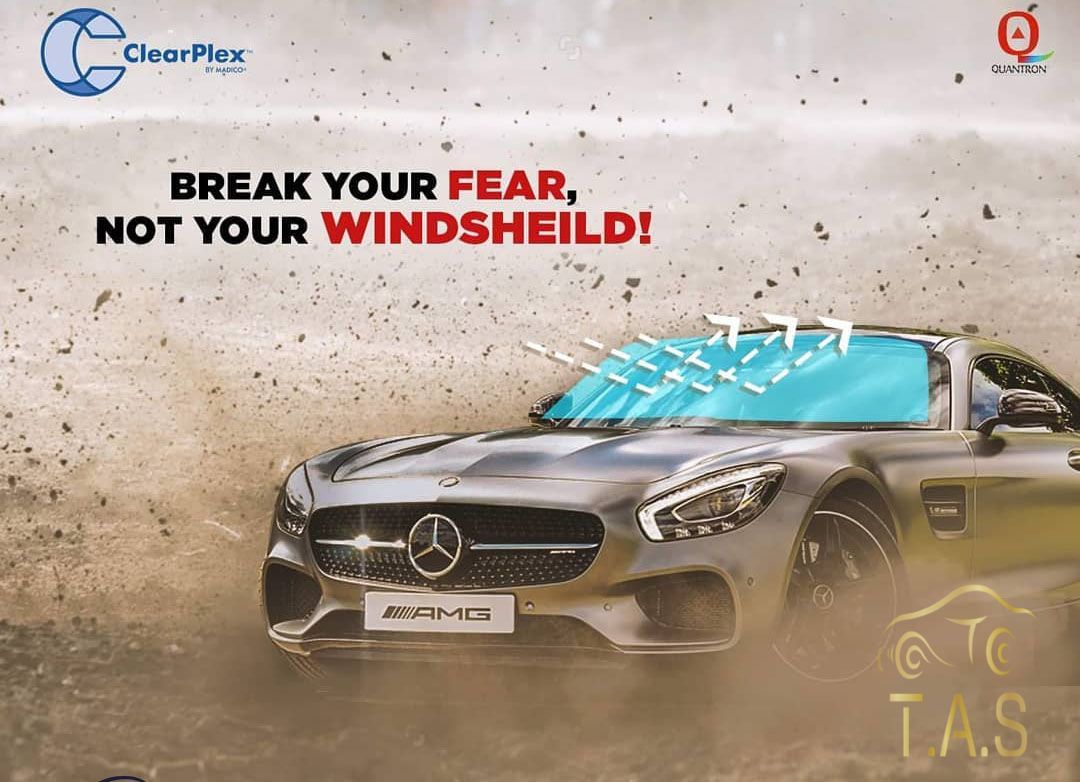
A safety glazing film is a clear or lightly tinted multi-layered polyester film applied to the inner surface of car windows. The film has a strong adhesive bond that clings to the glass surface, acting as a barrier that holds broken glass together during accidents, forceful break-ins, or other dangerous situations. The tint adds a privacy layer, while the UV protection reduces sunlight exposure to the cabin and occupants.
Best for: owners who prioritize glass safety and UV protection alongside heat and glare control.
Popular Comparison Terms Customers Use
Many buyers search by brand names and product families before choosing an installer. We help compare these options by practical metrics like VLT legality, TSER, IR rejection range, UV protection, clarity, and signal behavior.
- Nano ceramic heat-rejecting window film classes (including UVX-style products)
- Safety glazing / sun control film lines (including Garware-type compliant ranges)
- Ceramic vs deep dyed vs metalized film performance
How We Recommend the Right Film
We shortlist films based on three inputs: your driving pattern (city/highway), daytime parking exposure, and budget. Then we match VLT compliance, TSER target, and warranty expectations before installation. In most cases where comfort and long-term satisfaction matter most, premium ceramic is the option we recommend first.
Pricing & Packages
- Basic Budget Film: ₹13,000 (TSER around 30%)
- Advanced Heat Rejection (Intermediate): ₹18,000 (TSER around 40-45%)
- Ceramic Heat Rejection Film: ₹20,000 to ₹24,000 (TSER 50%+ on select premium models, strong UV rejection, strong IR rejection, model dependent)
Exact performance depends on selected film model, vehicle glass type, and VLT choice.
Why Choose T.A.S for Sun Film Installation
- Legal-first consultation on VLT options
- Transparent explanation of TSER/IR/UV metrics
- Closed-studio installation environment, not roadside/open-air fitting
- Professional installation lubricants and process products (not household substitutes)
- Cleaner, safer edge finishing with better consistency and reduced contamination risk
- Practical guidance for curing, cleaning, and long-term care
- Free full-car wash included with every installation (worth ₹600)
Why This Matters vs Typical Accessories Shops
- Roadside/open-bay fitting increases dust contamination risk during film application.
- Non-specialized liquids can affect slip, curing behavior, and final finish quality.
- Controlled studio workflow improves finish uniformity, edge quality, and long-term durability.
- Post-install support and process discipline reduce rework and peeling-related issues.
Common Questions
What is the legal VLT requirement for sun film in India?
CMVR-linked thresholds commonly referenced are at least 70% VLT for front and rear windscreen glass and at least 50% VLT for side glass. Enforcement can vary, so we recommend confirming current local RTO/police interpretation before installation.
What matters more for heat reduction: dark shade or film quality?
Film technology and tested performance values matter more than darkness alone. A lighter, high-quality ceramic film can reject more heat than a darker low-grade tint.
What is TSER and why is it important?
TSER (Total Solar Energy Rejected) is a broader measure of overall solar heat rejection across UV, visible, and infrared bands. Higher TSER is usually a better indicator of real-world cabin heat control.
Is IR rejection alone enough to compare films?
Not always. IR values can be measured across different wavelength ranges, so comparing only IR can be misleading. Compare TSER and VLT together for practical performance and legality.
Will sun film block mobile, GPS, FASTag, or radio signals?
Non-metallic films such as ceramic and many dyed films are usually more signal-friendly. Metalized films are the main category that can affect signal performance.
Do you recommend metalized film for cars?
No. We do not recommend metalized film for most cars because it can interfere with GPS, FASTag, mobile reception, and other signal-dependent systems. Our recommendation for cars is to stay with non-metallic film options.
How long does car window tinting installation take?
Typically 4-6 hours for most cars, depending on glass condition, demister lines, and the selected film.
Can I wash my car immediately after installation?
Avoid aggressive cleaning on glass edges for the first few days. We provide post-install curing and care guidance at delivery.
Does sun film help protect dashboards and seats?
Yes. Strong UV rejection helps slow fading, cracking, and aging of interior plastics, leather, and fabrics.
Related Services
Ready to Protect Your Car?
Get a personalized quote and expert advice for car window tinting (sun film).