Frequently Asked Questions
Everything you need to know about our car detailing services, pricing, and care tips. Can't find what you're looking for? Chat with us!
What is ceramic coating and how long does it last?
Ceramic coating is a liquid-applied paint protection layer that bonds to the surface after proper preparation. Durability depends on the product tier, vehicle usage, wash routine, and maintenance. At T.A.S Detailing Studio, we guide customers toward the right tier based on ownership period, budget, and paint condition rather than promising one fixed lifespan for every car.
How much does ceramic coating cost in Kerala?
Ceramic coating pricing at T.A.S Detailing Studio starts from around ₹12,000 for entry-level protection and increases based on the coating tier, paint correction required, and vehicle size. The final recommendation depends on the current paint condition and the level of gloss, durability, and maintenance support you want.
What is PPF and how is it different from ceramic coating?
PPF (Paint Protection Film) is a clear film applied over the paint to absorb stone chips, light scratches, and road impact. Ceramic coating is a surface-applied protective layer focused more on gloss, washability, chemical resistance, and easier maintenance. For some vehicles, the right solution is PPF on impact-prone areas and coating on the rest of the body.
Is ceramic coating worth it in Kerala's climate?
For many owners, yes. Kerala's combination of sun, rain, humidity, bird droppings, tree fallout, and regular washing can wear down unprotected paint quickly. A properly maintained coating can make cleaning easier and help preserve gloss for longer, especially on daily-driven vehicles.
How long does a ceramic coating application take?
Most coating jobs take 1 to 3 days depending on the selected tier, the amount of paint correction required, and the curing needs of the product. We inspect the paint first and confirm the realistic turnaround before starting work.
What is included in your interior detailing service?
Interior detailing usually includes vacuuming, plastics and trim cleaning, upholstery or leather cleaning based on the cabin type, glass cleaning, and attention to common touch points. The exact scope varies by package and by the condition of the interior when the car arrives.
How often should I detail my car?
That depends on how you use the car. Daily-driven vehicles usually benefit from periodic maintenance cleaning and detailing at scheduled intervals, while enthusiast or low-use cars may need it less often. We normally recommend a schedule based on parking conditions, mileage, and whether the car already has coating or PPF.
What is graphene coating and how is it different from ceramic coating?
In the market, graphene-branded coatings are generally positioned as premium coating systems with their own chemistry, durability targets, and maintenance requirements. The practical difference depends on the actual product, not just the label. We explain the strengths, tradeoffs, and expected upkeep of each option before recommending one.
Can you remove scratches and swirl marks from my car?
Yes, paint correction can reduce or remove many swirl marks, wash marring, oxidation, and some light scratches. Results depend on paint depth and the severity of the defect. We inspect the vehicle first and explain what is safely correctable before any polishing work begins.
What payment methods do you accept?
We accept common payment methods including cash, cards, UPI, and bank transfer. For higher-value jobs, we confirm the advance amount and payment terms before booking.
Do you provide warranty on your services?
Eligible coating, PPF, and film packages carry warranty coverage that varies by product line and installation category. We explain the applicable manufacturer or product-backed coverage, care requirements, and exclusions before delivery so expectations stay clear.
What is borophene coating for cars?
In automotive detailing, borophene coating is typically a borophene-enhanced nano coating system designed to improve gloss, water beading, and long-term surface care compared with entry-level coatings.
How long does borophene coating last?
Our Borophene Pro package is positioned for 3-5 years, while Borophene Self-Heal is offered with a 5-year protection plan. Actual life depends on wash methods, parking conditions, and periodic maintenance.
Is borophene better than ceramic or graphene?
It is positioned as a newer premium option. Real-world results depend more on paint preparation, installer quality, and aftercare than name alone. For many owners, borophene is chosen for gloss, slickness, and long-term ease of cleaning rather than any promise of scratch prevention.
What does self-healing mean in the 5-year package?
Self-healing means the top layer can reduce the appearance of fine wash swirls when activated by heat (sunlight or warm water). It does not repair deep scratches or paint chips.
Is borophene coating enough for stone-chip protection?
No. Like ceramic or graphene coatings, borophene is a chemical protection layer, not an impact barrier. For stone-chip and scratch impact protection, full or partial PPF is the right solution.
What is graphene coating and why is it better than ceramic?
Graphene coating adds graphene-related components to a polymer matrix to create a premium coating package focused on gloss, easier maintenance, and long-term finish care. It should not be presented as scratch-proof, water-spot-proof, or dust-proof.
Which graphene package should I choose?
Graphene Shield suits owners keeping their car up to 2 years. Graphene Pro is great for daily drivers wanting 3-5 year protection. Graphene Ultra (our most popular) offers 5-7 years with self-healing bonds. Graphene Ultra Plus is our flagship — up to 9 years with research-grade GSO2 technology.
How long does graphene coating last?
Depending on the tier — Graphene Shield lasts up to 2 years, Graphene Pro lasts 3-5 years, Graphene Ultra lasts 5-7 years, and Graphene Ultra Plus provides up to 9 years of protection with proper maintenance.
What makes Graphene Ultra Plus different from Graphene Ultra?
Graphene Ultra Plus uses Elite GSO2 — research-grade, functionalised graphene superoxide from NXTZen that is chemically bonded into the polymer matrix. It blocks up to 20% of UVA radiation permanently, is resistant to chemicals up to pH 14, and has been independently tested by CSIRO. Graphene Ultra also has self-healing bonds but uses a standard graphene formulation.
Is graphene coating worth it for Kerala's climate?
Yes, if you want easier maintenance and a premium coating package for Kerala conditions. We do not present graphene as a guarantee against water spots, dust accumulation, or wash-induced swirls, because those still depend heavily on washing, drying, and handling.
What is ceramic coating and how does it work?
Ceramic coating is a liquid polymer that chemically bonds with your car's paint, creating a hard, transparent surface layer. It is mainly chosen for gloss, easier cleaning, and improved resistance to UV exposure and common contamination. It is not scratch-proof, and improper washing or handling can still create swirls or scratches.
Which ceramic package should I choose?
Ceramic Shield suits owners keeping their car up to 1 year. Ceramic Guard is ideal for daily drivers wanting 2-3 year protection. Ceramic Ultra (our most popular) gives 3-5 years with professional paint correction included. Ceramic Ultra Plus is our flagship — up to 9 years with self-healing composite ceramic technology.
How long does ceramic coating last?
Depending on the tier — Ceramic Shield lasts up to 1 year, Ceramic Guard lasts 2-3 years, Ceramic Ultra lasts 3-5 years, and Ceramic Ultra Plus provides up to 9 years of protection with proper maintenance and annual inspections.
What makes Ceramic Ultra Plus different?
Ceramic Ultra Plus uses a 10H composite ceramic with CSIRO-tested self-healing properties and chemical resistance up to pH 14. It offers Multi-Cure Layer Technology for unmatched durability — the same research-grade standard as our Graphene Ultra Plus coating.
Is ceramic coating worth it for Kerala's climate?
Yes, if your goal is easier maintenance and better finish retention in Kerala's climate. Ceramic coating can help with water beading, gloss retention, and resistance to UV exposure and common contamination, but it does not prevent water spots, dust buildup, or wash-induced swirls.
What is the legal VLT requirement for sun film in India?
CMVR-linked thresholds commonly referenced are at least 70% VLT for front and rear windscreen glass and at least 50% VLT for side glass. Enforcement can vary, so we recommend confirming current local RTO/police interpretation before installation.
What matters more for heat reduction: dark shade or film quality?
Film technology and tested performance values matter more than darkness alone. A lighter, high-quality ceramic film can reject more heat than a darker low-grade tint.
What is TSER and why is it important?
TSER (Total Solar Energy Rejected) is a broader measure of overall solar heat rejection across UV, visible, and infrared bands. Higher TSER is usually a better indicator of real-world cabin heat control.
Is IR rejection alone enough to compare films?
Not always. IR values can be measured across different wavelength ranges, so comparing only IR can be misleading. Compare TSER and VLT together for practical performance and legality.
Will sun film block mobile, GPS, FASTag, or radio signals?
Non-metallic films such as ceramic and many dyed films are usually more signal-friendly. Metalized films are the main category that can affect signal performance.
Do you recommend metalized film for cars?
No. We do not recommend metalized film for most cars because it can interfere with GPS, FASTag, mobile reception, and other signal-dependent systems. Our recommendation for cars is to stay with non-metallic film options.
How long does car window tinting installation take?
Typically 4-6 hours for most cars, depending on glass condition, demister lines, and the selected film.
Can I wash my car immediately after installation?
Avoid aggressive cleaning on glass edges for the first few days. We provide post-install curing and care guidance at delivery.
Does sun film help protect dashboards and seats?
Yes. Strong UV rejection helps slow fading, cracking, and aging of interior plastics, leather, and fabrics.
Why does my glass-walled office or showroom get so hot even with AC running?
Standard flat glass transmits most of the solar energy that hits it — visible light, UV, and infrared heat. In Kerala's climate, west or south-facing glass walls can contribute a large proportion of your indoor heat load. Your AC is trying to compensate for heat entering continuously through the glass, which is why it runs constantly without making the space feel comfortable. Solar control film is applied to the glass surface and intercepts that heat before it enters the room — reducing the load on your AC at the source.
How much will it reduce indoor temperature?
The reduction depends on glass orientation, film grade, and how much of the heat load is coming through glass versus other sources. Spaces with large west or south-facing glass panels — showrooms, glass-partitioned offices, modern homes with glass walls — typically see a noticeable temperature improvement. Most clients also report their AC running less frequently after installation. We assess your specific space before recommending a film grade.
Will my electricity bill actually go down?
If a meaningful portion of your current AC load is driven by solar heat gain through glass, yes — reducing that heat gain at the source means your AC works less to maintain the same temperature. The improvement is most significant in spaces with large direct-sun-facing glass. We cannot guarantee a specific saving percentage as it depends on your building, glass area, and current AC setup, but reduced AC runtime after installation is consistently reported by building clients.
Will the film make my space dark?
No — solar control film is not a blackout film. Films are available in a wide range of VLT (Visible Light Transmission) values. Ceramic and high-performance solar films can reject significant heat while still transmitting good natural light — the space looks and feels similar, just cooler. We select the right VLT based on your comfort, aesthetic, and lighting preferences.
Who needs building glass heat rejection film most?
Anyone with glass walls, large windows, or glass partitions that face west or south in Kerala's climate. The biggest gains are seen in automobile showrooms and retail showrooms with glass frontage, open-plan offices with glass curtain walls or partitions, modern homes and villas with floor-to-ceiling or glass wall construction, retail shops where customers and merchandise are exposed to direct sun, and high-rise apartments or commercial buildings with large glass facades.
Is this different from car window tinting?
Yes — completely different product and process. Architectural film is manufactured in wider rolls for flat glass panels and is tested for building-scale UV and thermal performance. Car window tinting is designed for curved automotive glass with legal VLT requirements. There are no VLT legal restrictions for building glass. We use architectural-grade film specifically designed for building applications.
Does it work on glass partitions inside buildings?
Yes. Interior glass partitions — especially those separating sun-facing rooms from interior workspaces — can be filmed. It reduces both the heat and glare that passes through from sun-lit areas into the rest of the building.
How long does the film last?
A professional solar control film on building glass typically lasts 5–8 years. Ceramic-grade architectural film can last 8–12 years under normal conditions. Longevity depends on glass orientation, cleaning methods used, and whether furniture or objects regularly contact the glass surface.
How do you price building glass film projects?
Pricing is per square foot of glass area and depends on the film grade selected and site specifics (height, access, glass condition). We visit the site or review your measurements and provide a written quote before any work begins. There is no obligation — contact us with your building type and approximate glass area for an initial discussion.
Can film be applied to tinted or double-glazed glass?
In most cases yes — film is applied to the interior surface of the glass. We inspect the glass type and condition during the site visit to confirm compatibility and recommend the appropriate film for your existing glass specification.
Will this help me see better when driving at night in the rain?
Yes — this is one of the biggest benefits most drivers notice immediately. When your windscreen is untreated, water droplets sit on the surface and scatter oncoming headlights into a blinding starburst or halo effect. The hydrophobic coating causes water to sheet off almost instantly, so there are no droplets sitting on the glass to scatter light. Night rain driving becomes significantly safer and less stressful.
Can I drive without wipers in the rain after coating?
At highway speeds — typically above 60 km/h — yes. The airflow and the hydrophobic surface work together to push water off the glass before it even accumulates. In city traffic at low speeds you will still need wipers, but you will find yourself using them much less frequently and on a lower setting. Many customers report switching from continuous to intermittent wiper use even in moderate rain.
How does this extend wiper blade life?
Wiper blades wear out quickly for two reasons: friction against dry or gritty glass, and the blade having to push heavy standing water. A hydrophobic coating dramatically reduces both. Water beads off instead of pooling, so the blade is moving through far less water. The glass surface is also kept cleaner (dust, grime, and road film don't stick as easily), reducing abrasive friction on the blade rubber. Most customers notice their wiper blades lasting significantly longer after coating.
I get a greasy smear on my windscreen especially at night — will this fix it?
That greasy smear is a thin oil film from exhaust fumes, road grime, and windscreen washer fluid residue. It is invisible in daylight but creates intense halo and glare effects at night when headlights hit it. The deep glass decontamination we do before applying the coating removes this film completely. The hydrophobic coating then makes the glass highly repellent to oily contaminants, so it stays cleaner for much longer.
Does this help in Kerala's heavy monsoon rains?
It is specifically very useful in heavy tropical monsoon conditions. Kerala's intense downpours are exactly the conditions where hydrophobic coating makes the biggest difference — the harder the rain, the more effectively the water beads and rolls off. Many of our customers get this done specifically before the June–July monsoon season to be prepared for the rainy months ahead.
Will it reduce the annoying wiper chatter and skipping sound?
Wiper chatter happens when the blade skips over dry patches or surface irregularities on the glass. A clean, hydrophobic-coated glass has a more consistent, smooth surface that wiper blades glide over far more evenly. This significantly reduces chatter and the uneven smearing pattern that many drivers deal with. If your wipers are already badly worn, replacing the blades alongside this service gives the best result.
What about insects and bugs hitting the windscreen?
Bug and insect splatter is much easier to remove from a hydrophobic-coated windscreen. The coating prevents the proteins in insect residue from bonding tightly to the glass surface. A quick rinse or a single wiper pass removes most fresh splatter, compared to the stubborn dried-on residue that untreated glass develops. This is especially useful for highway driving and evening/night drives when insects are most active.
Will it prevent water spots and mineral deposits after rain?
Yes. Water spots form when rainwater (which carries dissolved minerals) sits on the glass and evaporates, leaving mineral deposits behind. Because the coating causes water to bead and roll off quickly rather than sitting and evaporating, mineral deposit formation is greatly reduced. Your glass stays clearer and easier to see through between cleaning sessions.
Does it work with rain sensors and all wiper systems?
Yes, fully compatible with all wiper and rain sensor systems. The coating is completely transparent and does not affect the glass surface in any way that would interfere with sensor calibration. Rain sensors may actually trigger less frequently after coating, as less water accumulates on the sensor area — which is a sign it is working correctly.
How long does the coating last and how do I maintain it?
The coating typically lasts 12 months with normal use. Longevity depends on wiper usage frequency, glass cleaning habits, and exposure to harsh chemicals. Avoid ammonia-based glass cleaners as they degrade hydrophobic coatings. Use plain water, a microfibre cloth, or a dedicated glass cleaner. When you notice water no longer beading as strongly, it is time for a reapplication — we offer a refresher treatment at a reduced cost.
Do I really need PPF on Indian roads?
Indian highway driving is significantly more damaging to paint than most drivers realize. Trucks and heavy vehicles kick up stones, gravel, and road debris at high velocity — at 80 km/h, even a small stone hits with enough force to chip paint and leave pitting. NH66, NH44, and state highways through Kerala are particularly rough during and after monsoon season when loose gravel is common. PPF is the only product that provides physical impact protection — ceramic and graphene coatings protect chemically but offer no meaningful defense against stone chips.
What does self-healing actually mean?
Self-healing refers to the top coat layer of the PPF, which is made from an elastomeric polymer that can return to its original shape when heated. Light surface scratches — the kind that happen from car wash brushes, wiping with a cloth, or minor contact — are reduced or eliminated when the film is exposed to warm water or sunlight. Self-healing does not repair deep scratches, gouges, or impact damage that has broken through the film surface. It is a swirl-management feature, not a damage-repair feature.
Which panels should I prioritize for PPF?
The front of the car takes the overwhelming majority of stone chip and debris impact. The bonnet, front bumper, and front fenders collectively catch around 80% of all road debris damage. The A-pillars and door handles are high-frequency scratch zones from loading and unloading. Our Full Front package covers all of these, which is why it is the most popular choice — it addresses the highest-risk zones for most of the cost of a full body application.
How does PPF protect my car's resale value?
Paint condition is one of the biggest factors in second-hand car valuation in India. Stone chips, wiper scratches, and sun fade significantly reduce the price a buyer will offer. A car with PPF-protected panels typically shows near-factory paint condition when the film is removed before sale, commanding a noticeably better resale price. For high-value vehicles — SUVs, sedans, and imported cars — the resale value gain often justifies the PPF cost outright.
Can PPF be applied to an older car with existing paint issues?
It depends on the paint condition. PPF applied over existing scratches, chips, or swirl marks will lock those defects in place permanently — they will be visible under the film. For older cars with paint issues, we recommend a paint correction or decontamination wash first to bring the paint to the best possible condition before application. We will assess your car's paint at the free inspection visit and advise honestly on preparation needed.
How is PPF different from ceramic coating — can I do both?
PPF and ceramic coating protect against completely different threats. PPF is a physical barrier — 180 microns thick — that absorbs stone chips, scratches, and impact damage. Ceramic coating is a chemical protection layer that resists UV, bird drops, chemical fallout, and water spotting, and makes the surface easier to clean. The two are complementary: many customers do PPF on impact-prone panels and ceramic coating over the entire car, including over the PPF, for maximum all-round protection.
Will PPF yellow or peel over time?
Premium films from established brands like LLumar are formulated to resist UV yellowing. Budget or low-quality films — including many uncertified domestic films — can yellow, bubble, or peel within 1-2 years. Our films come with manufacturer warranties of 5-10 years covering defects including yellowing, bubbling, and delamination. Proper installation quality is equally important — poorly applied film will lift at edges and trap moisture. We do not use budget films and our installation process includes proper edge sealing.
How do I clean and maintain a PPF-protected car?
PPF-protected cars can be washed normally. Avoid high-pressure jets directed at film edges, which can lift adhesive over time. Use pH-neutral car shampoo and a clean microfibre wash mitt. Avoid abrasive compounds or clay bar on PPF surfaces. For the self-healing top coat, occasional exposure to warm water or sunlight helps maintain the scratch-reduction properties. We provide full care instructions at handover.
Is PPF worth the cost compared to just respraying after damage occurs?
A single-panel respray on a mid-range car typically costs ₹8,000–₹20,000, and color matching on modern metallic or pearl paints is difficult — a repainted panel often looks slightly different from the original. Multiple panels, or a bonnet respray with blending, can exceed ₹30,000–₹50,000. PPF prevents damage from occurring in the first place and the factory paint remains intact underneath. For cars driven on highways regularly, PPF typically pays for itself by avoiding two or three major paint repairs over the protection period.
Where do most scratches happen on cars driven in India?
The front and rear bumper corners take the most damage in Indian parking lots — tight spaces, high curbs, and other cars opening doors in confined areas. Side mirrors are frequently clipped on narrow roads and overtaking situations common on Kerala's state highways. Door handle cups scratch from daily use as fingernails and rings drag across the paint. Door edges and boot sill edges pick up scratches from loading and unloading. These six zones account for the overwhelming majority of visible everyday paint damage on Indian cars.
What areas are included in the Essential package?
The Essential package covers the six highest-risk zones: front bumper corners, rear bumper corners, both side mirrors, inside door handle cups (all doors), door step sills (all doors), and door edges. These are the areas that statistically take the most damage on Indian-driven cars. Approximately 20 square feet of PPF material is used across all six zones, applied with precision computer-cut templates for each vehicle model.
How thick is the film and will the edges be visible?
We use 180-micron self-healing PPF — thick enough to absorb meaningful contact damage but thin enough to remain nearly invisible on the car. On most colors and paint finishes, the film edges are essentially undetectable to a casual observer. On very dark matte or satin paints, a subtle edge line may be visible close up. We use computer-cut templates specific to each car model to ensure edges land in recesses and natural body lines wherever possible, minimizing visibility further.
Can this be applied to a car that already has scratches or swirls?
PPF applied over existing scratches locks them in permanently — they will be visible under the clear film. For cars with paint defects, we recommend paint correction or at minimum a decontamination wash first, bringing the paint to the best possible condition before application. We do a paint inspection at the start of every PPF job and will advise you on preparation needed. Bringing the vehicle in for a free pre-assessment is the best first step.
Is this package permanent — can the film be removed later?
PPF is not permanent. It can be professionally removed at any time without damaging the factory paint underneath — provided the paint was in good condition before application and the car has been reasonably maintained. Many customers remove PPF before selling the car to reveal the undamaged factory paint beneath, which improves resale appeal significantly. The film itself carries a 3-year manufacturer's warranty against yellowing, bubbling, and delamination.
How is this different from full PPF — when should I consider upgrading?
The Essential package protects the six highest-frequency scratch zones. Full PPF extends coverage to the entire bonnet, front fenders, all door panels, and more — it is designed primarily for stone chip and highway debris protection on the full front end and sides. If you drive frequently on national highways or in conditions where stone chips are a real concern, the Full Front or Full Body PPF package is the better choice. The Essential package is the right starting point for urban and mixed driving where parking lot scratches and contact damage are the primary risk.
Does the film need any special maintenance?
Normal washing with pH-neutral car shampoo and a clean microfibre mitt is fine. Avoid directing high- pressure jets at film edges, as sustained pressure can lift the adhesive over time. Avoid abrasive compounds or clay bar on PPF surfaces. The self-healing top coat benefits from occasional warm water exposure, which helps reduce light surface marks. We provide full care instructions at handover.
How often should I reapply?
Reapply every 4-6 months for best gloss and water behavior, especially on daily-driven cars.
Is ceramic wax a good alternative to ceramic coating?
Yes, if you want visible gloss and short-term paint protection without paying for a multi-year coating package. Ceramic wax is a practical middle-ground option for daily drivers, older cars, and owners who want easier maintenance but do not need the durability of full ceramic coating.
How long does ceramic wax realistically last on a daily-driven car?
On a regularly used car, ceramic wax typically performs well for around 6+ months in real conditions. Sun, rain, repeated washing, and parking outside will reduce its lifespan faster than a garage-kept vehicle, which is why periodic top-up application is recommended.
Does the car need polishing before ceramic wax is applied?
Not always. If the paint is already in decent condition, a proper wash, decontamination, and wax application are enough. If the surface has swirl marks, oxidation, or dullness, a light machine polish may be recommended first so the wax enhances a cleaner and more reflective finish.
Can ceramic wax be applied on top of an existing coating or sealant?
In some cases, yes, but the paint surface needs to be assessed first. If an older coating is still present, ceramic wax can work as a gloss and hydrophobic top-up. If the old layer is patchy or failing unevenly, surface preparation is more important than simply adding another product on top.
What maintenance helps ceramic wax last longer?
Wash with a pH-neutral shampoo, avoid harsh detergents, and dry with clean microfiber towels. Less aggressive washing and fewer chemical cleaners help preserve the wax layer, which keeps the paint glossier and easier to maintain between visits.
What is nano sealant and how is it different from wax?
Nano sealant is a synthetic polymer-based paint protection product that bonds to the paint surface using silica (SiO2) nanoparticles. Unlike traditional carnauba wax, which sits on top of the paint and washes off within 4-6 weeks, nano sealant chemically bonds to the clear coat and lasts 3-4 months under regular use. It is more durable than wax, provides stronger water-beading behavior, and offers better UV and chemical resistance. It is not as durable as a full ceramic coating, but it is significantly faster to apply — a complete application takes 2 hours rather than a full day.
Is nano sealant useful on top of an existing ceramic coating?
Yes — this is one of the most effective uses of nano sealant. Applied over a ceramic coating that has been in service for 6-12 months, a sealant spray acts as a maintenance layer that reinforces the hydrophobic performance and refreshes the gloss without requiring a full coating reapplication. Products like Gtechniq C2v3 and Gyeon Cure are specifically designed for this use — they are compatible with ceramic coatings and enhance rather than interfere with the underlying coating's chemistry.
When would I choose nano sealant instead of ceramic coating?
Nano sealant makes sense in three situations: as a short-term protection for a car you are planning to sell within 3-6 months, as a seasonal top-up applied before Kerala's monsoon season to reinforce the paint surface, or as a budget-conscious option for a car where full ceramic coating is not justified by the vehicle's age or condition. For cars you plan to keep long-term, ceramic coating delivers far better value over time — the higher upfront cost is offset by years of protection rather than quarterly reapplication.
How does nano sealant affect the paint's gloss?
Nano sealant adds a noticeable improvement in gloss and depth compared to bare paint or wax. The silica-based chemistry creates a glass-like reflective surface that looks significantly better than untreated paint, particularly in direct sunlight. The effect is not as deep or vivid as a multi-layer ceramic coating, but it is a genuine, visible improvement. Products like Gtechniq C2v3 Liquid Crystal are specifically formulated for maximum gloss intensity from a spray-on application.
How long does nano sealant protection last in Kerala's conditions?
Under Kerala's conditions — frequent rain, intense sun, and high humidity — nano sealant typically lasts 3 months on a regularly driven car washed every 1-2 weeks. The sealant's silica layer degrades with every wash cycle and UV exposure. Monsoon season is harder on sealant than dry season because of more frequent washing. Applying a fresh sealant layer before monsoon (June) and again before summer (March) is a practical maintenance rhythm for cars without a full ceramic coating.
Can I apply nano sealant myself after buying the product?
Spray sealants like Gtechniq C2v3 and Gyeon Cure are available for home use, but professional application ensures the paint is properly cleaned and decontaminated before the sealant goes on. Sealant applied over a surface with bonded contamination, water spots, or residual old wax will seal those defects in rather than coating clean paint. Our application starts with a thorough wash and decontamination, which is the step most DIY applications skip — and the step that most affects how long the sealant performs.
What are those arc-shaped marks on my windscreen?
Those are wiper marks — fine scratches etched into the glass in a wiper-arc pattern by blades dragging grit and dried debris across the surface repeatedly. They are most visible in sunlight or when facing oncoming headlights at night, where they scatter light into glare. They can be polished out as long as the scratches are surface-level and you cannot feel them with a fingernail.
Why do water spots form on glass and why are they hard to remove?
Water spots form when water dries on glass, leaving dissolved minerals — primarily calcium and magnesium — bonded to the surface. These deposits are alkaline and bond chemically to glass, so regular glass cleaner cannot remove them. Kerala's rainwater and tap water carry high mineral content, and fast evaporation in tropical heat makes deposits form quickly. Removal requires specialized acidic glass polish to dissolve and abrade the bonded mineral layer.
Will restoration fix the halos and glare I see from headlights at night?
In most cases, yes. Night halos and glare are usually caused by surface micro-scratches, mineral haze, or UV-induced pitting on the outer glass surface scattering incoming light. Polishing removes this damaged layer and restores optical clarity. If the issue is from an oil film on the inside of the glass, dirty interior glass, or deep structural damage, restoration alone may not fully resolve it — but the majority of night glare complaints are addressed by glass restoration.
Can deep scratches be polished out?
Only surface-level scratches can be removed by polishing. If you can feel a scratch with your fingernail, it has penetrated too deep to polish out safely. The same applies if the windshield already has cracks or deep chips. In those cases replacement is the right option. We inspect every windshield before quoting and give you an honest answer — we will not attempt work that cannot deliver a safe result.
Do you polish scratches on the inside of the windshield?
No. Windshield restoration is limited to the outer glass surface only. We correct exterior wiper marks, haze, mineral deposits, and eligible surface scratches. Interior defects, internal haze, or damage within the laminated glass cannot be corrected through exterior polishing.
When does restoration work vs when is replacement needed?
Restoration works for surface issues: wiper marks, mineral water spots, UV haze, and light scratches. It cannot fix cracks, deep chips, internal delamination, or structural damage. If you have a crack or impact damage that has gone beyond the surface, replacement is usually needed for safety. For everything else, restoration is the right first step — it costs significantly less and resolves the vast majority of visibility complaints.
Can paint overspray, watermarks, and stains be removed safely?
Yes, in many cases they can. Paint overspray, watermarks, and other bonded surface contaminants can usually be removed safely with proper glass decontamination and polishing techniques. The key is using the correct process — not abrasive shortcuts that scratch the glass.
What should never be used on a windshield?
Avoid sandpaper, scrubbers, and any harsh abrasive materials. These are common causes of permanent glass scratching. Windshields should also never be wiped aggressively when dry or when dust and debris are sitting on the surface or trapped in the wiper blades.
How much does windshield replacement cost vs restoration in India?
Standard windshield replacement costs ₹6,000–₹15,000 for a hatchback or sedan. On newer vehicles with rain sensors, heads-up display, or ADAS cameras — common from 2020 onwards — replacement costs ₹25,000–₹80,000 because sensors require recalibration after the glass change. Glass restoration starts at ₹3,000 and resolves most visibility issues without those complications.
How long do restoration results last?
Polishing permanently removes the surface defects present at the time of service. New water spots, wiper marks, or scratches will form again from the same causes over time. Applying hydrophobic coating after restoration extends the benefit significantly — a hydrophobic surface repels water before it evaporates and leaves mineral deposits, and keeps the glass cleaner, reducing wiper-induced abrasion.
How do I prevent new windshield scratches after restoration?
- Do not run the wipers on a dry windshield.
- Clean dust, mud, and trapped particles off the glass and wiper blades before using them.
- Replace hardened or worn wiper blades early.
- Avoid harsh cleaning tools, scrubbers, and abrasive DIY methods.
Prevention matters because windshield glass is far harder to correct than painted body panels.
Should I get hydrophobic coating done after restoration?
Yes — this is the ideal combination. Restoration removes existing damage. Hydrophobic coating then protects the freshly polished glass, prevents water spots from forming, and keeps the surface cleaner for longer. The two services together give the best visibility outcome and extend the time before restoration is needed again. We offer both as a discounted combination at TAS.
How badly do yellowed headlights affect night driving safety?
Significantly. Research by the AAA Foundation found that oxidized, foggy headlights can reduce light projection by up to 75%, cutting your effective visibility from 150 feet down to around 37 feet — less than the stopping distance at 60 km/h. Even moderately discolored lights reduce night vision by around 50%. Most drivers adapt without realizing the headlights are the cause, making it a hidden safety risk.
Why do headlights yellow so fast in Kerala?
Modern headlight lenses are polycarbonate plastic, not glass. Polycarbonate is impact-resistant but degrades rapidly under UV exposure, and Kerala's intense tropical sun delivers far higher UV intensity than temperate climates — especially during summer and the post-monsoon months. The factory UV-protective coating wears off within 2-4 years, after which the polycarbonate oxidizes quickly. Cars parked outdoors in Kerala degrade noticeably faster than garage-kept vehicles.
Can I restore headlights myself with a kit from the market?
DIY kits can remove surface yellowing but results are typically short-lived — often 3-6 months — because most kits skip the UV resealing step. Without properly sealing the polycarbonate after sanding, UV oxidation restarts almost immediately. Professional restoration uses multi-stage wet sanding, machine compounding, machine polishing, and a proper UV-resistant sealant or PPF topcoat, delivering results that last 1-3+ years rather than months.
How long does restoration last?
Without any topcoat protection, professional restoration lasts 1-2 years before oxidation begins returning, depending on UV exposure. With a UV sealant, this extends to around 2 years. With Headlight PPF applied on top of the restored lens, results last 3+ years — the film acts as a permanent UV barrier, preventing re-oxidation. We always recommend the Restoration + PPF package for the best long-term outcome.
At what point do headlights need replacement rather than restoration?
Restoration works for surface oxidation, yellowing, and light scratches on the outer polycarbonate lens. It cannot fix cracked lenses, internal fogging or condensation inside the housing, deep impact damage, or delamination of the inner reflector coating. If you can feel a scratch with your fingernail, it is too deep to polish out. We assess every headlight before quoting and give you an honest recommendation — we will tell you if replacement is the better option.
How expensive is headlight replacement on modern cars?
It varies widely. On entry-level cars, replacement assemblies cost ₹4,000–₹10,000. On mid-range cars with projector and DRL units, this rises to ₹15,000–₹40,000 per side. On premium European vehicles with adaptive LED or laser headlights, replacement can exceed ₹80,000–₹1,50,000 per headlight, and insurance typically does not cover cosmetic degradation. Professional restoration at ₹2,500 for both headlights is the far more economical first option when damage is still surface-level.
Will the yellowing come back after restoration?
Yes, eventually — polycarbonate will always re-oxidize under UV without a protective barrier on top. Professional restoration removes the existing oxidation cleanly and a UV sealant slows the return significantly. The best prevention is applying Headlight PPF immediately after restoration — the film permanently shields the freshly polished lens from UV. Without any topcoat, oxidation typically begins returning within 1-2 years under Kerala's UV conditions.
Does headlight condition affect vehicle inspection?
Yes. Motor vehicle regulations require headlights to be in proper working order, and visibly yellowed or hazy lights that significantly reduce beam output can be flagged during inspection. Beyond compliance, heavily degraded headlights that contribute to a nighttime accident can complicate insurance claims, as insurers may note the pre-existing condition as a contributing factor.
What are swirl marks and how do they appear?
Swirl marks are fine circular scratches in the clear coat, most visible in direct sunlight or artificial light where they appear as a web-like pattern across the paint. They are caused by improper washing — automated car washes with spinning brushes, wiping a dusty car with a dry cloth, and using dirty wash mitts are the most common causes. In India, most cars develop visible swirl marks within 2-3 years of ownership due to the widespread use of automated car washes and dry wiping practices.
Why does paint look dull even on a relatively new car?
Paint dullness usually comes from one of three sources: swirl marks and micro-scratches in the clear coat scattering light rather than reflecting it cleanly; oxidation from UV exposure that degrades the clear coat surface over time; or a buildup of bonded contamination — iron fallout, traffic film, and mineral deposits — that sits on the paint and reduces reflectivity. Kerala's intense tropical sun accelerates UV oxidation faster than most climates. A car parked outdoors in Trivandrum will show visible paint fading and dullness faster than the same car kept in a garage.
Can I fix swirls and dullness myself with a DA polisher?
A dual-action polisher can remove light swirls with the right compound and pad combination. However, incorrect technique, wrong product selection, or excessive cutting can thin the clear coat, create holograms, or produce uneven results that look worse than the original swirls. Paint thickness varies across panels and at edges, and professional correction involves paint depth measurement to ensure safe material removal. For deep correction or full swirl removal, professional machine polishing with proper equipment and technique delivers consistently better and safer results.
How do I know if I need single stage or multi-stage correction?
Single stage correction handles light to moderate swirls, light scratches, and minor oxidation — the kind of damage that accumulates on a well-maintained car over 2-5 years. It removes 60-80% of surface defects. Multi-stage correction uses a more aggressive cutting compound first, then refining polishes, and can remove 90-100% of surface defects. It is needed for heavily scratched paint, significant oxidation or fading, deep swirl marks, repainted panels with orange peel, or cars that have not been properly maintained for many years. We assess paint condition and recommend the appropriate level at inspection.
Will paint correction thin my clear coat — is it safe to do repeatedly?
Paint correction removes a small amount of clear coat by abrasion — typically 2-5 microns per correction session. Factory clear coats are usually 40-60 microns thick. A single correction is well within safe limits. Repeated aggressive corrections over many years can eventually thin the clear coat to a point where it becomes risky, which is why we measure paint thickness before correction and recommend coating the paint after correction to protect it and reduce the need for future aggressive correction cycles.
What should I do after paint correction to protect the results?
Paint correction results are permanent — the scratches removed do not return. But unprotected corrected paint is exposed to the same UV, contamination, and mechanical damage that created the defects in the first place. Applying ceramic or graphene coating immediately after correction preserves the result, protects the clear coat from further degradation, and makes the car significantly easier to maintain. Correction followed by coating is the standard combination at TAS — most customers do both together.
Will the scratches come back after paint correction?
The scratches and swirl marks removed during paint correction do not come back on their own. This is a permanent removal process, not a temporary filler or masking treatment. However, improper washing, dry wiping, dirty cloths, hard water drying, and poor maintenance can create new scratches and watermarks over time. So the corrected defects will not reappear, but new damage can still be introduced if the car is not washed and maintained properly.
Is there any warranty or guarantee for paint correction?
No. Paint correction is a defect removal process, not a coating or film with a warranty period. Once the work is completed, the finish depends heavily on how the car is washed and maintained afterward. If the vehicle is not cared for properly, new scratches, swirl marks, and watermarks can develop, and we cannot offer a warranty or guarantee against that. Proper wash technique and aftercare are what preserve the result.
Can all scratches be removed fully?
No. Light swirl marks, wash marks, and surface-level scratches can often be removed very well, but deeper scratches may only improve and not disappear fully. If the damage has gone too deep into the clear coat or beyond it, complete removal may not be safely possible. We assess the defect depth before recommending the right level of correction.
How long will the gloss improvement last?
The improvement itself is permanent because the defects removed do not come back on their own. But how long the finish stays sharp depends on washing habits, parking conditions, maintenance, and whether the car is protected with sealant, wax, or a coating afterward. Proper care keeps the finish looking better for much longer.
How do I know whether my car needs Quick Glow or Multi-Stage Detailing?
Quick Glow is for cars that mainly need a faster gloss improvement with limited correction. It suits paint with mild dullness and lighter wash marks. Multi-Stage Detailing is for cars with heavier swirls, watermarks, oxidation, fading, older neglected paint, or when you want the surface properly prepared before ceramic, graphene, or borophene coating. We inspect the paint and advise which option makes sense.
Will paint correction remove watermarks and stains completely?
Light to moderate watermarks and surface staining can usually be removed or improved significantly. But deep etched watermarks may not go away 100% if they have already damaged the paint too much. In such cases, we aim for the safest and best possible improvement rather than over-cutting the paint.
Can you do this only on selected panels?
Yes. If only the bonnet, roof, boot, or a few panels are affected, we can do correction on selected areas after inspection. But if the paint condition is uneven across the car, a full correction package usually gives a more consistent final result.
Can heavily oxidized, sun-faded paint be fully restored without repainting?
It depends on how deep the oxidation has penetrated. Surface oxidation in the clear coat can be polished out with aggressive compound work, often achieving a dramatic improvement. When oxidation has eaten through the clear coat entirely and begun affecting the base color coat, paint correction cannot fix it — the surface will look uneven and the color will not recover fully. Repainting of those panels is the only option in that case. We will tell you honestly at inspection which situation applies to your car.
Does paint correction improve a car's resale value?
Significantly, yes. Paint condition is one of the first things any knowledgeable buyer or dealer evaluates on a second-hand car. A car with dull, swirl-marked paint gets lowball offers. A car with corrected, well-maintained paint commands a better price and sells faster. For mid-range to premium vehicles, the resale value improvement from correction often exceeds the cost of the service — especially when paired with a ceramic coating that maintains the result through to the point of sale.
Why does my car smell musty and damp inside?
The most common cause in Kerala is moisture accumulation in the cabin — from wet footwear during monsoon, damp clothing, and the naturally high ambient humidity. Over time, this moisture soaks into seat foam, carpet padding, and door lining, creating the ideal environment for mold and mildew growth. The musty smell is the mold. It does not go away on its own and typically gets worse if untreated. Deep foam cleaning removes the mold and organic matter causing the odor at the source, not just masking it with air freshener.
How often should I get interior detailing done in Kerala?
For daily-driven cars in Kerala, once a year is a reasonable baseline — ideally after the monsoon season ends in October-November when accumulated moisture, mud, and dampness have had months to settle into fabric and foam. Cars driven with children, pets, or regular food and drink inside benefit from more frequent cleaning. Even cars that appear reasonably clean can have significant bacterial buildup in seat foam and carpet that a surface wipe cannot address.
Can deep stains on fabric seats actually be removed?
Most stains can be significantly reduced or fully removed with professional foam cleaning, depending on the stain type and how long it has been set. Fresh stains respond better than old, dried-in stains. Food, beverages, and mud respond well. Ink, dye transfer, and certain chemicals are harder. We assess each case at the start of the service and set realistic expectations — we will not promise full removal for stains that are unlikely to come out fully, but the improvement is almost always significant.
What about the AC smell — is that addressed in this service?
The musty AC smell is caused by mold and bacteria growing on the evaporator coil inside the AC unit — not in the cabin itself. Interior detailing cleans the cabin surfaces and foam, which removes a lot of odor sources, but does not directly treat the AC evaporator. AC vent cleaning with an anti-bacterial treatment is available as an add-on to this service and specifically targets the AC-related smell. For stronger odor-control cases, anti-bacterial treatment can be added after inspection.
Is the cleaning safe for touchscreens, leather seats, and electronic components?
Yes. We use products formulated for automotive interiors and adjust technique for each surface. Touchscreens and infotainment panels are cleaned with screen-safe, lint-free microfibre cloths and alcohol-free cleaners. Leather is cleaned with pH-balanced leather cleaner. Electronic components are not directly wetted. We have cleaned interiors of vehicles ranging from standard hatchbacks to BMWs and Mercedes — surface compatibility is part of our standard process.
What is the difference between Express Clean and Deep Clean?
Express Clean is a thorough surface clean — vacuum, wipe-down of all hard surfaces, glass cleaning, and air freshener. It takes 3-4 hours and is suitable for regularly maintained cars that need a refresh. Deep Clean goes significantly further: foam cleaning of all seats, doors, floor, and roof lining, seat belt cleaning, full vacuum, and all hard surfaces. This is for cars that have not been deep cleaned in a year or more, or that have visible staining and odor issues. Deep Clean Plus additionally removes the seats entirely for underneath-seat cleaning.
How long do the results last and how should I maintain the interior between cleans?
A professionally cleaned interior stays noticeably cleaner for several months with basic care. The key habits that make the biggest difference are removing wet footwear before getting in during monsoon, not leaving wet umbrellas or clothing in the car, vacuuming every 2-4 weeks, and wiping hard surfaces with a damp microfibre cloth monthly. These simple steps can extend the time between professional cleans significantly.
Do you use harsh chemicals that leave residue or strong smell?
No. We use professional-grade automotive interior cleaning products — foam cleaners, upholstery shampoos, and surface dressings — formulated to rinse out cleanly from fabric without leaving sticky residue or chemical odor. The interior smells clean after the service, not perfumed or chemical. We avoid ammonia-based glass cleaners and harsh solvents that damage plastics and leave residue over time.
How often should I condition leather?
Every 3–6 months for standard conditioning. The ceramic coating option provides protection for up to 18 months before a top-up is needed.
Why do leather car seats crack and fade?
The most common causes are UV exposure, cabin heat buildup, friction on high-contact areas like seat bolsters, body oils and dirt grinding into the surface, and the use of harsh cleaners. Together these wear down the protective topcoat, causing drying, discoloration, and surface cracking. Read the full guide on leather seat care, cracking, and fading.
Can cracked or faded leather seats be fixed?
Mild to moderate wear can often be improved with deep cleaning, conditioning, colour touch-up, and surface protection. If the leather has split deeply, peeled heavily, or lost structural strength, repair or panel replacement may be the better option.
Does the ceramic coating change how the leather looks or feels?
No. It leaves a natural matte finish that does not alter the texture or appearance of the leather.
Is it safe for synthetic or vegan leather?
Yes. The ceramic coating is compatible with all modern automotive leather types including synthetic and vegan upholstery.
What surfaces does the coating cover?
Seats, door panels, armrests, and steering wheels — all leather and leatherette surfaces in the cabin.
How often should AC be cleaned?
Every 6-12 months for daily-driven cars, or sooner if you notice musty smell, stale air, or reduced airflow.
Why does my car AC smell bad only for the first few seconds after I switch it on?
That usually points to moisture and odor-causing buildup sitting inside the vent and duct path when the car is parked. Once airflow increases, the smell may fade, but the contamination is still there.
Why does the smell get worse after rain or during monsoon season?
High humidity makes it harder for the AC airflow path to dry out fully. When moisture stays trapped inside the vents and ducts, musty odor tends to build up faster and return more often.
My AC cooling is fine, but the air smells stale. Is this service still useful?
Yes. Many cars cool normally even when the vent and duct area has odor-causing contamination. This service is meant for smell, stale airflow, and hygiene concerns, not only cooling complaints.
Will this fix weak cooling or other AC performance problems?
No. This is a vent and duct disinfection service, not a full AC system cleaning or repair. If the issue is gas leakage, compressor weakness, blower faults, or a blockage that needs disassembly, that requires AC repair work.
I already tried a spray and the smell came back. Why?
Surface sprays often mask odor for a short time but do not clean the accessible duct surfaces properly. This service uses steam first and then dedicated AC duct foam to target the contamination more directly.
Does this service involve opening the full AC system or dashboard?
No. This service focuses on accessible vents and duct paths only. It does not include full AC system dismantling, evaporator removal, or internal repair work.
Can I pause my membership?
Membership flexibility depends on the selected plan and billing structure. We confirm the pause or reschedule policy before enrollment.
What is underbody coating and why does my car need it?
Underbody coating is a rubberized protective layer applied to the metal surfaces beneath your car — the floor pan, chassis rails, wheel arches, and suspension mounts. In Kerala's high-humidity and coastal environment, untreated underbody metal corrodes much faster than in drier climates. The coating seals the metal from moisture, road salt, and debris, preventing rust from forming. Most new cars have a thin factory coating that wears off within 2–3 years.
How long does underbody coating take?
The full process takes 2 days. Day 1 is preparation — pressure washing, degreasing, rust treatment, and masking. Day 2 is coating application and curing. We recommend dropping the car off early on Day 1 and collecting on Day 2 evening.
How long does the coating last?
Our rubberized underbody coating lasts 5–7 years under normal driving conditions. Kerala's monsoon and humidity are factored into our material choice. The coating does not peel, crack, or bubble — it flexes with the chassis.
What is the difference between the two packages?
The Underbody Rust Shield covers all exposed metal on the underbody with a thick black rubberized coat. The Underbody + Silencer Guard adds a high-temperature silver coating on your exhaust/silencer system, which is exposed to both heat and moisture and corrodes separately from the underbody. If your silencer shows discolouration or surface rust, the combined package is the right choice.
Does my new car need underbody coating?
Yes — factory underbody coatings on most production cars are thin and wear off within 2–3 years. Applying a proper rubberized coat at 6–12 months of ownership, before rust begins, is far more effective than treating rust later. For pre-owned cars, we inspect and treat existing rust spots before coating.
Will the coating affect brake lines or sensors?
No. Our technicians mask all brake lines, ABS sensors, oxygen sensors, exhaust hangers, and drain plugs before coating. Only bare metal panels that benefit from protection are coated.
Is silencer coating the same as underbody coating?
No — they are different materials. Underbody coating is a rubberized black compound for impact and corrosion resistance on chassis metal. Silencer coating is a high-temperature silver ceramic paint designed for exhaust surfaces that reach 300–600°C. Using the wrong product on the silencer will burn off quickly — which is why we use heat-rated material exclusively for exhaust coatings.
Is underbody coating worth it?
Yes — especially in Kerala. The cost of underbody coating is a fraction of what rust repair or chassis welding costs later. Once rust penetrates the floor pan or chassis rails, repair involves cutting and welding structural steel — easily ₹15,000–₹40,000+. A preventive coating done early protects the entire underbody for 5–7 years. It also reduces road noise and protects the vehicle's resale value. For cars driven in monsoon, coastal, or waterlogged areas, undercoating is one of the best-value services available.
What type of underbody coating does TAS use?
We use a professional-grade rubberized under-seal compound — a rubber-modified bitumen product engineered specifically for passenger vehicles. This is very different from cheap bare asphalt or coal-tar coatings used on commercial trucks. The rubber content makes it flexible, so it moves with the chassis without cracking, bonds firmly to bare metal, provides significant road noise dampening, and is proven for Kerala's monsoon and coastal conditions. For the silencer, we use a separate high-temperature ceramic paint rated for exhaust temperatures up to 600°C — a completely different material suited to the heat.
Is snow foam wash better than a normal local car wash?
Usually yes, because the foam pre-wash loosens dust and traffic film before the contact wash stage. That reduces the chance of rubbing grit across the paint, which is a common cause of swirl marks in daily-driven cars.
Is snow foam wash safe for ceramic-coated cars?
Yes. It is one of the better routine wash methods for coated cars because pH-balanced shampoo and a safer wash process help preserve hydrophobic behaviour better than harsh detergents or strong alkaline cleaners.
Will snow foam alone remove all dirt without touching the paint?
No. Snow foam is a pre-wash step, not a full no-touch solution for most Indian road conditions. It softens and lifts a large amount of loose dirt first, then the remaining contamination is cleaned more safely during the hand-wash stage.
How often should I get a snow foam wash?
For most daily-driven cars, a wash every 1-2 weeks works well. Cars parked outdoors, driven in rain, or exposed to construction dust, tree sap, or coastal contamination may need more frequent maintenance.
Can this remove mud, brake dust, and monsoon grime?
It handles routine road film, fresh mud, and normal wheel dirt well. Heavy brake dust, tar spots, iron fallout, and old bonded contamination may need add-on decontamination or a deeper cleaning package.
Why avoid local detergent or diesel-based washing?
Harsh cleaners and shortcut methods can dry trims, affect coatings, leave residue, and increase the risk of paint dullness over time. Professional car shampoo is formulated to clean with better surface safety.
Which package is best for a family car used every day?
Full Wash is the practical choice for most owners because it covers exterior cleaning, wheel and tyre care, interior vacuuming, and a cleaner overall finish without stepping up to full decontamination.
When should I choose Premium Wash instead of Express Wash?
Choose Premium Wash when the car has heavier contamination, dullness from repeated washing, or when you want gloss and protection top-up along with the wash. Express Wash is better for lightly dirty cars needing a quick exterior clean.
How is steam washing different from a regular pressure wash?
Steam washing uses superheated steam at 100-150°C to clean surfaces, while a conventional pressure wash uses high-volume cold or ambient-temperature water under pressure. Steam penetrates and loosens grease, road film, and biological matter more effectively than cold water alone, and the heat kills bacteria, mold, and dust mites on contact — something pressure washing does not do. Steam also uses far less water: typically 2-5 liters for a full session versus 50-200 liters for a conventional car wash, making it significantly more water-efficient.
Is steam cleaning safe for dashboard screens, leather, and electronics?
Yes, when used with proper technique. Steam temperature and pressure are adjusted for each surface type — lower temperature and indirect application for touchscreens and delicate trims, higher temperature and direct application for hard surfaces and fabrics. We do not apply steam directly to open electrical connectors or onto sensitive display surfaces at close range. The same care and adaptation that allows steam cleaning to be used in medical and food environments makes it appropriate for car interiors when done correctly.
Does steam actually sanitize the car interior?
Yes. Steam at 100°C+ kills most bacteria, mold, mildew, and dust mites on contact without requiring chemical disinfectants. This is particularly relevant in Kerala's humid climate where car interiors that trap moisture — from monsoon wet footwear, damp clothing, and ambient humidity — develop bacterial and mold growth in seat foam and carpet that is invisible but present. Steam reaches into fabric and foam surfaces that a surface spray cannot penetrate, providing genuine sanitization rather than surface-level disinfection.
How much water does steam washing use compared to a normal car wash?
A steam wash typically uses 2-5 liters of water for a complete session. A conventional car wash with a hose uses 150-200 liters. Even a water-efficient pressure wash setup uses 50-80 liters. This makes steam washing particularly appropriate during Kerala's summer months when water availability is constrained and water conservation matters, and at apartment complexes and locations where drainage facilities are limited.
Can steam cleaning be used on the engine bay?
Yes — steam is actually the preferred method for engine bay cleaning because it removes grease effectively without the high water volume of pressure washing, and is safer around electrical components when used correctly. The targeted nature of a steam nozzle allows cleaning around connectors and sensors with more control than a pressure washer.
Is steam washing suitable for the car interior as well as exterior?
Steam is highly effective on interiors. Fabric seats, carpet, door linings, dashboard surfaces, AC vents, and tight crevices between seat cushions are all areas where steam cleaning outperforms conventional methods. It reaches into gaps that brushes and cloths cannot access, loosens and lifts embedded dirt from fabric fibers, and sanitizes as it cleans. Interior steam cleaning is particularly effective for removing the damp, musty smell that develops in Kerala-driven cars during and after monsoon season.
How often should I decontaminate?
Every 6-12 months for daily-driven cars, and always before polishing, waxing, sealant, or ceramic coating work.
Is decontamination safe for my paint?
Yes, decontamination is completely safe for your paint when done properly. Our methods use industry-approved chemical treatments and clay bars that are designed specifically to remove bonded contaminants without damaging the clear coat. The process is gentler than compound polishing.
What's the difference between decontamination and washing?
Regular washing removes loose dirt and dust, but cannot remove bonded contaminants like tar, iron fallout, and tree sap that have stuck to the paint. These bonded impurities make the paint rough and can only be removed through chemical decontamination or clay bar treatment.
Can I decontaminate before ceramic coating?
Yes, decontamination is essential before any ceramic coating application. A contaminated surface prevents the coating from bonding properly, which reduces durability and protection. We always recommend decontamination as a preparation step before coating installation.
Will decontamination remove all paint imperfections?
Decontamination removes bonded contaminants but will not fix etches, swirl marks, or scratches that are already in the clear coat. For those issues, paint correction or polishing may be needed. Decontamination is a prep step that makes the surface clean and ready for protection or correction.
How long does the decontamination process take?
A full decontamination service typically takes 3-4 hours, depending on the vehicle's condition and paint surface area. This includes chemical treatment, iron remover, clay bar application, and tar/bug removal.
Is clay bar necessary, or can I skip it?
Clay bar treatment is highly recommended as a final step. It removes micro-contaminants that chemical treatments may have loosened and provides a perfectly smooth surface. Skipping this step leaves residual contamination and defeats the purpose of thorough decontamination.
What happens if I don't decontaminate before applying a protective product?
Applying wax, sealant, or ceramic coating over contaminated paint results in poor bonding and reduced protection. Contaminants create a barrier that prevents the product from adhering properly, shortening its lifespan and compromising durability. The contamination trapped underneath can also cause etching over time.
Is car wrapping cheaper than repainting?
For a full color change, wrapping is typically less expensive than a quality full respray and delivers a better outcome for resale — because the factory paint remains untouched underneath. A quality full respray costs ₹60,000–₹1,50,000+ depending on the car and shop quality. A full vinyl wrap costs ₹60,000 upwards, and a color PPF wrap costs more but offers better protection. When you sell the car, the wrap or film is removed to reveal original factory paint, which is worth more to a buyer than even a well-done respray. For partial changes like roof wraps or accent panels, wrapping is significantly cheaper than a targeted respray.
How long does vinyl wrap, color PPF, and paint last in Kerala's climate?
Vinyl wrap typically lasts 3-5 years in normal conditions. Color PPF is more durable and often lasts 5-7 years due to its thicker construction and better UV resistance. Paint, when properly applied and cured, can last 5-10 years or longer depending on maintenance. Kerala's intense tropical sun and high humidity are harder on all three options than temperate climates — UV exposure fades vinyl and weakens paint faster, particularly on roof panels and horizontal surfaces that receive direct sunlight. Parking in shade wherever possible, regular washing, and applying a ceramic coating over any option extends longevity significantly. We provide maintenance guidelines for each option at handover.
Can vinyl wrap and color PPF be removed without damaging the factory paint? What about painting?
Vinyl wrap and color PPF are both removable and will not damage factory paint when removed correctly, provided the paint was in good condition before application and the film is removed within its intended lifespan. Old, sun-damaged, or poorly adhered factory paint is at more risk — adhesive can pull weakened paint off when removed. We inspect paint condition before every wrap or PPF application and advise accordingly. Painting is different: it is permanent and replaces the factory clear coat entirely. Once painted, reverting to original paint requires a full respray. Painting is the right choice for owners who want a lasting color change they won't reverse later.
Can I wrap or paint a car that has scratched or damaged paint?
Vinyl wrap and color PPF hide visible defects while applied, but the damage remains underneath and will be revealed when removed. For minor surface scratches and swirls, this is usually acceptable — the wrap or film protects the paint from further damage during the application period. For deeper chips, rust spots, or significant paint failure, we recommend addressing those first, as moisture can get under vinyl or film edges near damaged areas and worsen the underlying paint. Painting is different — damaged paint should be repaired or sanded smooth before repainting to ensure a smooth, durable finish.
What finish options are available for vinyl wrap, color PPF, and painting?
Vinyl wrap offers the widest range of finishes: matte, satin, gloss, chrome, brushed metal, carbon fiber texture, and color-shifting chameleon finishes that transition between colors as the viewing angle changes. Color PPF is available in matte and gloss finishes, though the range is narrower than vinyl. Paint can be applied in any color and in gloss or matte finishes, but achieving specialty effects like chameleon or chrome finishes with paint is expensive and complex. Matte and satin finishes are particularly popular in Kerala because they are impossible to achieve affordably with paint on an existing car without a permanent respray, but easy to achieve and reverse with vinyl or available with PPF.
If vinyl wrap or color PPF gets damaged, can just that panel be replaced?
Yes, both vinyl wrap and color PPF can be replaced panel by panel. A single panel replacement is significantly cheaper than redoing the entire vehicle. The main challenge with vinyl is color matching — batches from different production runs can vary slightly, which may be visible at panel joins on some colors. This is less of an issue with matte or textured finishes where slight variation is less detectable. Color PPF is easier to color-match since color formulations are more consistent. Painted panels are also replaceable, but will require matching the paint finish to adjacent panels, which can be more challenging.
How do I wash and maintain vinyl wrap, color PPF, and painted surfaces?
All three options require similar care. Hand washing with a pH-neutral car shampoo and clean microfibre mitt is best. Avoid automated car washes with rotating brushes — they can lift wrap edges, damage PPF, or scratch paint. Avoid abrasive compounds, tar remover, and solvent-based cleaners that can degrade vinyl, discolor PPF, or damage clear coat. High-pressure washing at edges or seams requires care with wrap and PPF. For all three options, applying a protective ceramic coating after installation adds UV resistance and makes cleaning easier. We provide specific maintenance recommendations for your chosen option at handover.
Can wrapping be done to change just the roof or accent panels?
Yes — partial wraps are one of the most popular applications. A black or contrasting roof wrap transforms the look of a car dramatically at much lower cost than a full wrap. Roof wraps, bonnet wraps, mirror caps, and pillar wraps are all common partial applications. This is also a popular option for cars with a sun-faded or peeling roof that needs to be covered while retaining the original paint on the rest of the car.
Do you work on all bike brands?
Yes, we detail all motorcycles including Royal Enfield Bullet, Harley-Davidson, BMW, KTM, Ducati, Japanese sports bikes, and regular commuter bikes.
Can matte paint be polished?
No, matte painted parts cannot be polished as they will turn glossy. We use specialized matte-safe products for these surfaces.
How long does ceramic coating last on bikes?
Our ceramic coatings for bikes last 2-5 years depending on the tier selected and maintenance. The hydrophobic effect makes cleaning much easier.
Do you restore rusted chrome parts?
Yes, we can restore most chrome parts. Heavily rusted or pitted chrome may need re-chroming, which we can arrange through our partner workshops.
When is the right time to apply headlight PPF — new car or older car?
New cars are the ideal time — the headlight lenses are in perfect condition, and PPF applied to pristine lenses results in invisible protection with zero visible defects underneath. On older cars, deep stone chip pitting or existing UV yellowing may show through the clear film and the adhesion may be less consistent on degraded polycarbonate. If your headlights have visible damage, a headlight restoration service first will prepare the surface for optimal PPF adhesion. We assess condition at every fitting and advise accordingly.
Does headlight PPF affect the brightness or beam pattern of the lights?
No. The film is optically clear with high light transmission — it does not reduce light output or alter the beam pattern in any meaningful way. High-quality headlight PPF is designed specifically to maintain optical clarity without introducing haze, rainbow effects, or diffusion. The film is essentially invisible from outside the car once installed correctly.
How does headlight PPF protect against yellowing as well as chips?
The PPF film acts as a UV barrier over the polycarbonate lens, blocking the UV radiation that causes oxidation and yellowing. Without protection, Kerala's intense tropical sun attacks the bare polycarbonate surface once the factory UV coating wears off — typically within 2-4 years. The film prevents this by keeping UV from reaching the polycarbonate. Combined with the physical chip protection, headlight PPF addresses both the most common causes of headlight degradation simultaneously.
How is headlight PPF different from headlight restoration?
Restoration is the cure — it removes existing yellowing and surface damage from a degraded headlight. PPF is the prevention — it stops the damage from happening in the first place. The best approach depends on your headlights' current condition. New or lightly damaged headlights benefit most from PPF applied immediately. Headlights that are already yellowed or pitted need restoration first, then PPF applied over the freshly polished lens to prevent re-oxidation and future chip damage. We offer both as a combined service.
How long does headlight PPF last?
Quality headlight PPF carries a 5-year manufacturer's warranty against yellowing, bubbling, and delamination. With proper care, the film typically lasts 5-7 years before it needs replacement. The film can be removed and replaced without damaging the headlight lens — making it a long-term, renewable protection solution rather than a one-time treatment.
Can the film be removed if I need to replace the headlight assembly?
Yes. The film is removable by a professional installer without damaging the headlight housing or lens. If the headlight assembly needs replacement for any reason — accident damage, bulb housing failure, or internal condensation — the PPF is simply peeled off before the unit is removed and new PPF applied to the replacement assembly.
What metal surfaces on my bike can be coated?
Nano ceramic metal coating is applied to all exposed chrome, aluminum, and steel components — spokes, rims, clutch cover, engine cover, silencer, leg guard, handlebars, fork tubes, axles, brackets, hardware, and any other shiny metal parts visible on your bike. This is especially ideal for premium bikes with extensive chrome or polished alloy parts where maintaining the aesthetic shine and luster is important. The coating preserves the visual appeal of these surfaces against weathering and oxidation.
What does this coating protect against?
The nano ceramic coating protects against surface oxidation, weathering, UV exposure, and environmental contamination that dull or discolor metal over time. In coastal Kerala's humid and salty environment, exposed metal loses its shine relatively quickly without protection. The transparent coating acts as a barrier against salt air, moisture, and pollutants that cause white powdery deposits (oxidation) on chrome and alloy surfaces. It does NOT prevent internal structural rust within nuts, bolts, or enclosed metal areas — it protects only the exposed surfaces you can see and touch.
Will this coating prevent rust?
This coating protects against surface oxidation and weathering on exposed metal, which keeps surfaces looking shiny and new. However, it is not structural rust protection for internal corrosion within fasteners, threaded areas, or enclosed metal components. Its primary purpose is to maintain the aesthetic shine and appearance of premium bike metal parts, not to serve as heavy-duty corrosion prevention. Properly maintained bikes in coastal areas still benefit from regular cleaning and drying to prevent moisture accumulation in internal areas.
How long does nano ceramic coating on bikes last?
On a regularly maintained bike, properly applied nano ceramic coating lasts 1-2 years before the protective layer gradually diminishes. In coastal Kerala with high humidity and salt air exposure, maintenance and reapplication every 12-18 months is recommended for premium bikes where maintaining finish is important. Regular washing and drying of the bike extends coating life significantly. Reapplication is straightforward and takes a few hours.
Will the coating change the appearance of my chrome or metal parts?
No — the coating is transparent and designed to preserve the original shine, luster, and appearance of your metal parts. You will not see a film or color change. The benefit is that your chrome and polished surfaces maintain their bright, reflective finish longer despite exposure to salt air and humidity. Without the coating, exposed metal gradually loses its shine and develops white oxidation deposits; with the coating, that visual degradation is slowed significantly.
Is this suitable for all bikes?
This coating is most valuable for premium bikes with significant exposed chrome, polished alloy rims, or other shiny metal components where aesthetic appearance matters. Bikes with extensive plastic fairing or minimal exposed metal receive less benefit. The coating is ideal for cruiser bikes, classic bikes, touring bikes, and other models where exposed metal is a design feature and visual appeal is important. We can advise after inspection whether your specific bike is a good candidate.
Why does brake dust bond so aggressively to alloy wheels?
Brake dust is a mixture of fine metal particles abraded from the brake rotors and pads during braking. These particles are ejected at high temperature and land on the wheel surface while still hot, bonding to the alloy or painted wheel surface as they cool. Over time, iron particles oxidize into rust on the wheel surface, creating the reddish-brown staining that resists normal washing. The longer brake dust is left, the more permanently it bonds — and on intricate spoke designs, it is nearly impossible to fully remove with brushes alone once embedded.
Do the wheels need to be removed for coating?
Yes. Proper ceramic coating requires the wheels to be off the car for thorough cleaning, decontamination, iron fallout treatment, and polishing before the coating is applied. Trying to coat wheels on the car means working around tires, brake calipers, and suspension components — coating applied without complete surface preparation will not bond correctly and will peel or fail early. Off-car application also allows coating of the inner barrel, which stays cleaner longer and is much easier to clean when road grime cannot bond to it.
How much less frequently do I need to clean my wheels after coating?
Most customers notice they can go 2-3 times longer between wheel cleans after coating. Brake dust still accumulates — the coating does not stop dust from landing on the wheel — but it prevents the particles from bonding to the surface. Instead of needing a brush and degreaser to scrub off bonded iron, a rinse with water or a quick wipe with a wet cloth removes the loose dust completely. The difference in cleaning effort is one of the most immediately noticeable effects of the coating.
How does the coating handle the extreme heat generated near brake calipers?
Alloy ceramic coating is formulated specifically for the temperature conditions at wheels — which are far more demanding than body panels. The coating withstands temperatures well above what standard ceramic paint coatings handle. During normal driving and even heavy braking, the coating remains stable and continues to perform. It does not outgas, discolor, or lose adhesion under normal driving heat conditions.
How long does alloy ceramic coating last?
Properly applied, alloy ceramic coating lasts approximately 2 years before a reapplication is beneficial. Longevity depends on wheel cleaning frequency, the cleaning products used (avoid acid-based wheel cleaners, which degrade ceramic coatings), and how hard the car is driven. Annual inspection at your regular service is a good time to assess the coating condition.
Can this be applied to painted steel wheels or only alloys?
The coating can be applied to any metal wheel surface — painted steel wheels, raw alloy, polished alloy, or powder-coated alloy. The surface preparation process is adapted to the wheel type. Polished alloy benefits the most visually, as the coating deepens the shine and makes the polished surface far easier to maintain. Painted steel wheels benefit primarily from the easier cleaning and brake dust resistance properties.
Is it safe to wash an engine bay with water or steam?
Yes, when done correctly. Modern engines are designed to tolerate water exposure — sensors, connectors, and the ECU are sealed against moisture encountered in normal driving through rain and water crossings. Professional engine bay cleaning covers sensitive electrical components before cleaning, avoids directing high-pressure water at connectors, and allows proper drying before the vehicle is started. The risk comes from improper technique — pressure washing exposed connectors directly or not allowing the bay to dry. Done correctly, it is completely safe.
How often should I get the engine bay cleaned?
Once a year is a sensible baseline for most daily-driven cars, or whenever the car is being prepared for sale. Cars driven in dusty conditions, on construction-adjacent roads, or that have developed an oil seep or minor leak benefit from more frequent cleaning — a dirty engine bay makes any leaks impossible to spot until they become serious. For cars in Kerala's coastal areas, annual cleaning also removes salt air deposits that accumulate on metal components over time.
Can a clean engine bay actually help detect oil leaks?
Yes — this is one of the most practical benefits. On a dirty, greasy engine, a small oil seep from a gasket or hose blends invisibly into existing grime and can go undetected for months while it worsens. After thorough degreasing, the engine bay is a clean baseline. Any new oil, coolant, or fluid deposit is immediately visible at the next inspection. Many customers who get engine bay cleaning as part of a pre-sale preparation or annual service discover minor leaks they were unaware of — caught early, these are inexpensive fixes rather than costly repairs.
Does a dirty engine bay cause actual mechanical problems?
Yes, over time. Accumulated grease and grime acts as an insulating layer that traps heat around engine components. Excess heat accelerates the degradation of rubber hoses, gaskets, and plastic components. Grease buildup near ignition components can cause misfires in older vehicles. In Kerala's hot and humid climate, organic material buildup in the engine bay also attracts insects and rodents — a common cause of wiring damage that is difficult and expensive to repair.
How does engine bay condition affect resale value?
Significantly. Any knowledgeable second-hand buyer opens the bonnet during inspection. A clean, well- presented engine bay signals that the car has been properly maintained. A dark, greasy engine covered in accumulated grime signals the opposite — regardless of how well the rest of the car presents. In India's second-hand market, where buyers negotiate hard on any perceived maintenance concern, a clean engine bay is worth real money in the final price negotiation.
What exactly gets cleaned — does it cover plastic covers, hoses, and metal?
The full engine bay is cleaned: plastic engine covers and trim, rubber hoses and belts, metal surfaces, the firewall, the inner wings, and the underside of the bonnet. Plastic components are dressed with a plastic restorer to revive faded surfaces. Metal surfaces are cleaned of grease, grime, and surface oxidation. The result is not just a clean engine — it is a presentable, well-maintained-looking engine bay that holds its condition longer than a hastily wiped-down unit.
Is anti-bacterial fogging safe for my family?
We use an interior-safe treatment process and ventilate the cabin thoroughly after application. As with any chemical treatment, customers should follow the post-service guidance we provide before immediate reuse.
How often should I get anti-bacterial treatment?
It depends on your usage and household. Frequent users, pet owners, families with young children, and those with elderly or immunocompromised members benefit from quarterly treatment. For normal usage, annual treatment is recommended.
Will it remove all odors?
It helps significantly with odors caused by dampness, stale cabin air, organic residue, and AC-related contamination. Very heavy odor cases may also need interior detailing or AC vent cleaning for the best result.
What surfaces is this suitable for?
It is suitable for many automotive fabric surfaces such as cloth seats, soft trim, and some convertible fabric roofs, subject to inspection.
What is the difference between vinyl roof wrap, black PPF, and roof painting?
Vinyl wrap is the style-first option. It gives the roof a clean gloss or matte black finish at a lower price and is ideal when the main goal is visual change. Black PPF is the premium film option. It gives the same blacked-out look but uses a thicker film that better resists light scratches, minor stone impact, staining, and long-term wear. Roof painting is the permanent option. It takes longer, costs more than vinyl, and cannot be removed later, but it delivers a durable painted finish for owners who want a lasting color change rather than a removable film. If budget and appearance are the priority, vinyl is the practical choice. If you want style plus protection, black PPF is the better material. If you want a permanent roof color change, painting is the right route.
Which finish should I choose: gloss or matte?
Gloss gives the roof a deeper, more reflective, paint-style look and is the most popular choice for a factory-style black roof. If the goal is the best glass-like gloss black finish, black PPF or roof painting is usually the better choice over vinyl wrap. Vinyl wrap still looks good and is the value option, but black PPF and paint generally deliver a richer, smoother gloss appearance. Matte gives a softer, stealthier contrast and works well on cars where the owner wants the roof to stand out without high reflection.
Can a roof wrap be removed if I change my mind or sell the car?
Yes. Both vinyl roof wrap and black PPF are removable when installed and removed correctly. This is one of the major advantages over repainting: the original roof color stays underneath, so you can return the car to stock later or change finishes again. Professional removal is important, especially on older paint or films left on beyond their intended life. Roof painting is different: once the roof is repainted, the change is permanent and reversing it requires repainting again.
Will the roof wrap damage the factory paint underneath?
Not if the roof has sound factory paint and the film is applied and removed properly. In fact, the film shields the paint underneath from UV exposure, grime, and day-to-day abrasion while it is installed. The main risk is not the film itself but weak or already failing paint. If the roof has previous repainting, peeling clear coat, or unstable paint, we inspect that first and advise accordingly.
How long do vinyl roof wrap, black PPF, and roof painting last in Kerala's climate?
Roof panels take the heaviest UV exposure on the vehicle, so material choice matters. Vinyl wrap is the more economical option and typically gives a few years of good appearance when maintained properly. Black PPF generally holds up better over time because it is thicker, more durable, and better suited to ongoing environmental exposure. Roof painting is also a durable long-term option, but its final outcome depends heavily on paint quality, surface preparation, and correct curing. Parking in shade, regular washing, and avoiding harsh cleaning methods all extend the life of all three options.
Is roof wrap better than painting for a two-tone look?
For most purposes, yes. Vinyl wrap produces a clean, precise two-tone finish at a fraction of the cost of a paint job, with no risk to the factory clear coat on the rest of the car. A paint-based two-tone requires masking, spraying, blending, and cutting in — work that costs considerably more and permanently modifies the panel. Wrap can match almost any color from the vinyl catalog, and the edges can be tucked under trim pieces for a seamless, factory-style result. For permanent, deeply customized work where you want color-matching with a repainted body panel, paint is appropriate — for the popular two-tone roof look, wrap is the practical and cost-effective choice.
When should I choose roof painting instead of wrap or black PPF?
Choose roof painting when you want a permanent color change and are comfortable with the roof being refinished rather than covered with a removable film. It is also suitable when the existing roof paint is already failing badly and the proper solution is paint repair rather than covering it. In most other cases, vinyl wrap or black PPF makes more sense because both give the black roof look without permanently changing the panel.
Does it affect visibility?
High-clarity film is intended to preserve visibility, but suitability depends on the product and the condition of the glass before installation.
What is Paint Protection Film?
Paint protection film creates a crystal clear invisible barrier between the surface and the everyday rigours of the outside world. As a result, the underlying surface remains in as-new condition for years, as if the vehicle had just left the showroom.
Key Characteristics:** - Prevents scratches and swirls during washing - Higher gloss level than the paint itself - Virtually invisible when properly installed - Resilient and dampens impact from stones, gravel, branches, and desert sand - **90% of everyday damage to paint is prevented with PPF
What Does Paint Protection Film Protect Against?
PPF provides protection from: - Rock chips and stone damage - Minor scratches and scuffs - Harmful effects of chemicals - Bird droppings and bug splatter - Roadway hazards and debris - UV damage and fading
Important Note: Paint Protection Film is not designed to stop or prevent damage to the vehicle body. Most films have a self-healing property designed to repair swirl marks and light scratches. However, if debris penetrates the film layer, the self-healing property will no longer function in that area.
Why Choose PPF Over Repainting?
Consider this scenario: You can have your car repaired and repainted because of stone chips. However: - The originality is gone - The vehicle's integrity is now in doubt (was it just stone chips or a larger accident?) - Repainted panels affect resale value
For the same cost, you could have had PPF installed and enjoy driving carefree, without any potential paint damage now or in the future. The vehicle will command a higher value during trade-in or resale.
How Do I Maintain Paint Protection Film?
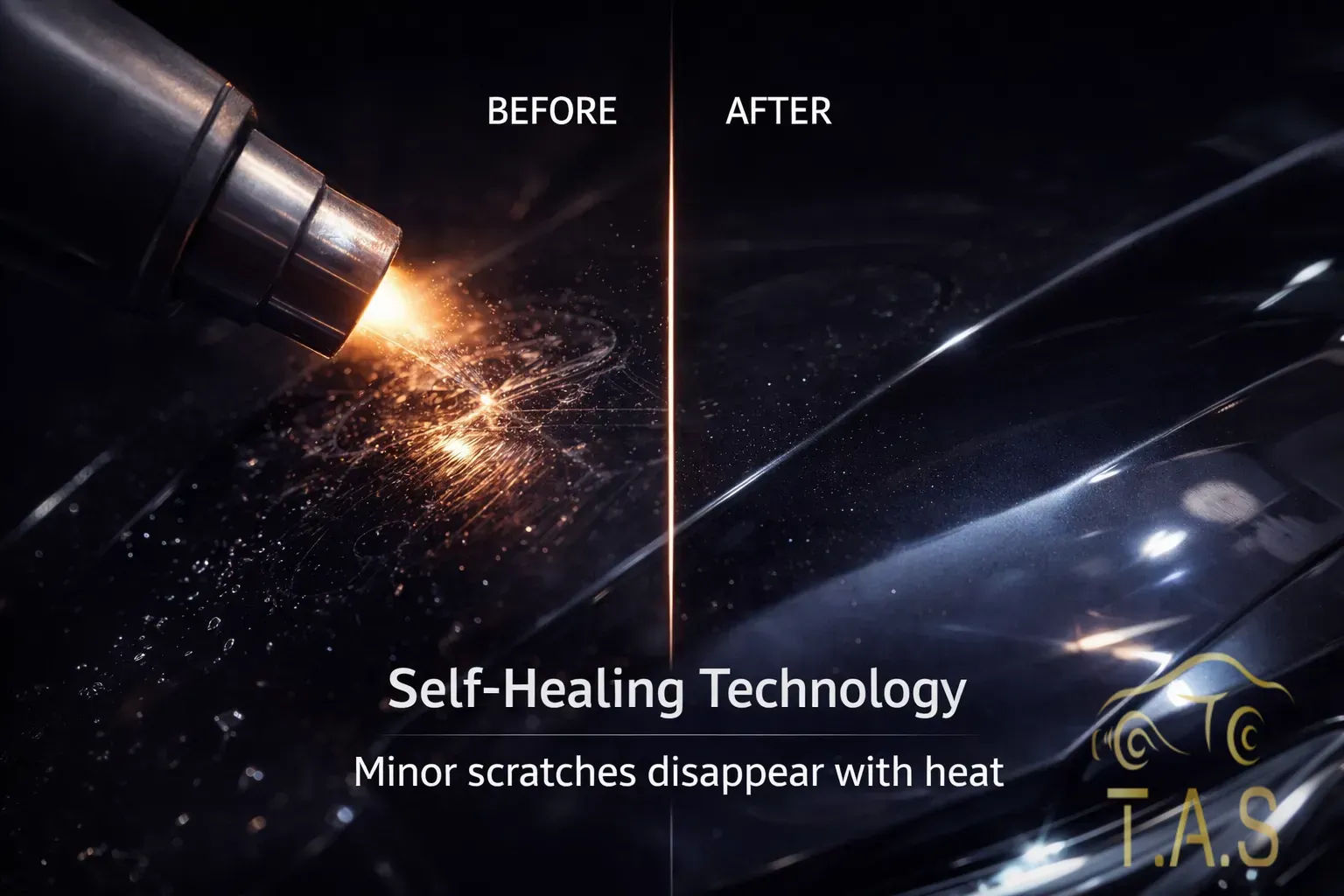
There is no special maintenance required for maintaining Paint Protection Film compared to paint.
Recommended Care: - Use pH-neutral/premium car wash shampoo - Apply spray wax or top coating sealant every 3-6 months - Regular washing (weekly or bi-weekly) - Avoid abrasive cleaning tools
Does the Film Affect the Look of the Paint?
No! PPF protects the paint against damage and keeps it in showroom condition year after year, while the film itself remains virtually invisible. Quality PPF has: - Crystal clear transparency - Gloss enhancement properties - Self-healing capabilities for minor marks
Can Wax Be Applied to Paint Protection Film?
Yes, you can simply wash and wax your car as normal. However, we recommend some small changes to your washing routine to ensure the longevity of your film: - Use only PPF-safe products - Avoid harsh chemicals - Don't use abrasive polish
Can Ceramic Coatings Be Applied to PPF?
While coatings can be applied to Paint Protection Film, it typically is not necessary and can provide a wide variety of results.
Our Recommendation: - Consult with your installer - Test a small discreet area first - Use coatings specifically designed for PPF
Benefits of Ceramic Coating Over PPF: - Enhanced hydrophobic properties - Easier cleaning - Additional UV protection - Added gloss
Can PPF Be Applied Over Ceramic Coating?
We do not recommend applying Paint Protection Film on top of a ceramic coating.
The PPF adhesive requires direct bonding to the paint for optimal adhesion and longevity. Ceramic coating creates a barrier that can prevent proper bonding.
Can Paint Protection Film Be Removed?
Yes. PPF has an adhesive layer that can be removed safely, without residue even years after application—without affecting the paint underneath. This makes it ideal for: - Lease vehicles - Trade-in preparation - Replacing damaged sections
How is Paint Protection Film Applied?
Applying Paint Protection Film can be challenging for even those that are properly trained. It is highly recommended that the film is installed by a professional.
Professional Installation Includes: - Computer-cut patterns for precision fit - Controlled environment (dust-free) - Proper surface preparation - Edge sealing for longevity - Quality inspection
What Parts Can PPF Be Applied To?
Paint Protection Film can be applied to areas of the vehicle that have been professionally painted:
- Bumpers (front and rear)
- Fenders
- Hood/bonnet
- Mirrors
- Doors
- Roof
- Trunk/boot
- Headlights and taillights
- A-pillars and door edges
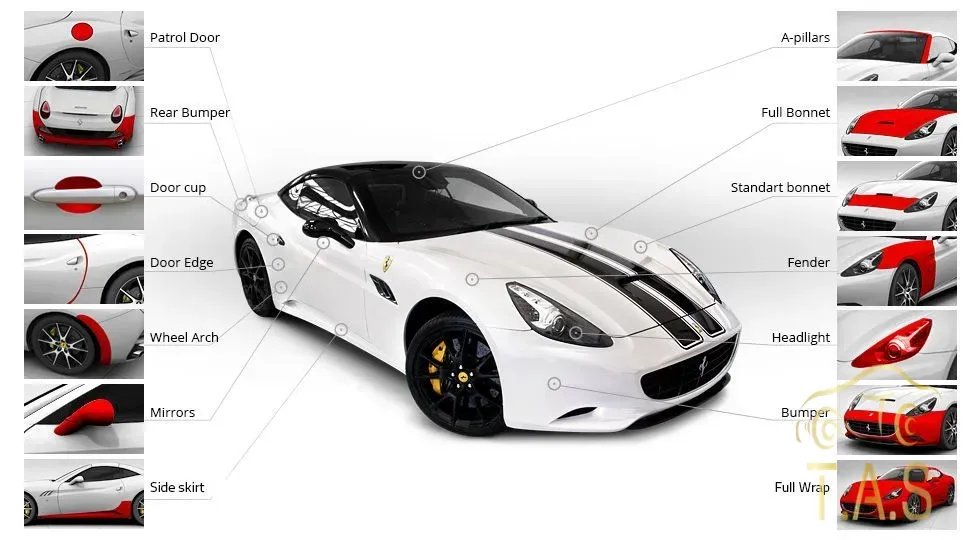
How Much Does PPF Cost?
Pricing depends on coverage and the amount of film required:
| Coverage | Price Range |
|---|---|
| Partial (high-impact areas) | ₹15,000 - ₹45,000 |
| Full front (bumper, hood, fenders, mirrors) | ₹45,000 - ₹80,000 |
| Full vehicle wrap | ₹1,00,000 - ₹2,50,000 |
| Per square foot | ₹400 - ₹900 |
*Prices vary based on vehicle size, film quality, and coverage extent.*
What Warranty Does PPF Come With?
Premium PPF products come with manufacturer warranties:
| Film Type | Warranty Period |
|---|---|
| Standard PPF | 5 years |
| Premium Self-Healing | 7 years |
| Ultra Premium | 10 years |
Warranty Coverage Typically Includes: - Yellowing or discoloration - Cracking or bubbling - Peeling or delamination - Self-healing failure
How Long Does Installation Take?
| Coverage Type | Duration |
|---|---|
| Partial coverage | 1-2 days |
| Full front | 2-3 days |
| Full vehicle | 4-7 days |
No questions found matching your search.
11 Questions General
What is ceramic coating and how long does it last?
Ceramic coating is a liquid-applied paint protection layer that bonds to the surface after proper preparation. Durability depends on the product tier, vehicle usage, wash routine, and maintenance. At T.A.S Detailing Studio, we guide customers toward the right tier based on ownership period, budget, and paint condition rather than promising one fixed lifespan for every car.
How much does ceramic coating cost in Kerala?
Ceramic coating pricing at T.A.S Detailing Studio starts from around ₹12,000 for entry-level protection and increases based on the coating tier, paint correction required, and vehicle size. The final recommendation depends on the current paint condition and the level of gloss, durability, and maintenance support you want.
What is PPF and how is it different from ceramic coating?
PPF (Paint Protection Film) is a clear film applied over the paint to absorb stone chips, light scratches, and road impact. Ceramic coating is a surface-applied protective layer focused more on gloss, washability, chemical resistance, and easier maintenance. For some vehicles, the right solution is PPF on impact-prone areas and coating on the rest of the body.
Is ceramic coating worth it in Kerala's climate?
For many owners, yes. Kerala's combination of sun, rain, humidity, bird droppings, tree fallout, and regular washing can wear down unprotected paint quickly. A properly maintained coating can make cleaning easier and help preserve gloss for longer, especially on daily-driven vehicles.
How long does a ceramic coating application take?
Most coating jobs take 1 to 3 days depending on the selected tier, the amount of paint correction required, and the curing needs of the product. We inspect the paint first and confirm the realistic turnaround before starting work.
What is included in your interior detailing service?
Interior detailing usually includes vacuuming, plastics and trim cleaning, upholstery or leather cleaning based on the cabin type, glass cleaning, and attention to common touch points. The exact scope varies by package and by the condition of the interior when the car arrives.
How often should I detail my car?
That depends on how you use the car. Daily-driven vehicles usually benefit from periodic maintenance cleaning and detailing at scheduled intervals, while enthusiast or low-use cars may need it less often. We normally recommend a schedule based on parking conditions, mileage, and whether the car already has coating or PPF.
What is graphene coating and how is it different from ceramic coating?
In the market, graphene-branded coatings are generally positioned as premium coating systems with their own chemistry, durability targets, and maintenance requirements. The practical difference depends on the actual product, not just the label. We explain the strengths, tradeoffs, and expected upkeep of each option before recommending one.
Can you remove scratches and swirl marks from my car?
Yes, paint correction can reduce or remove many swirl marks, wash marring, oxidation, and some light scratches. Results depend on paint depth and the severity of the defect. We inspect the vehicle first and explain what is safely correctable before any polishing work begins.
What payment methods do you accept?
We accept common payment methods including cash, cards, UPI, and bank transfer. For higher-value jobs, we confirm the advance amount and payment terms before booking.
Do you provide warranty on your services?
Eligible coating, PPF, and film packages carry warranty coverage that varies by product line and installation category. We explain the applicable manufacturer or product-backed coverage, care requirements, and exclusions before delivery so expectations stay clear.
72 Questions Paint Protection
What is borophene coating for cars?
In automotive detailing, borophene coating is typically a borophene-enhanced nano coating system designed to improve gloss, water beading, and long-term surface care compared with entry-level coatings.
How long does borophene coating last?
Our Borophene Pro package is positioned for 3-5 years, while Borophene Self-Heal is offered with a 5-year protection plan. Actual life depends on wash methods, parking conditions, and periodic maintenance.
Is borophene better than ceramic or graphene?
It is positioned as a newer premium option. Real-world results depend more on paint preparation, installer quality, and aftercare than name alone. For many owners, borophene is chosen for gloss, slickness, and long-term ease of cleaning rather than any promise of scratch prevention.
What does self-healing mean in the 5-year package?
Self-healing means the top layer can reduce the appearance of fine wash swirls when activated by heat (sunlight or warm water). It does not repair deep scratches or paint chips.
Is borophene coating enough for stone-chip protection?
No. Like ceramic or graphene coatings, borophene is a chemical protection layer, not an impact barrier. For stone-chip and scratch impact protection, full or partial PPF is the right solution.
What is graphene coating and why is it better than ceramic?
Graphene coating adds graphene-related components to a polymer matrix to create a premium coating package focused on gloss, easier maintenance, and long-term finish care. It should not be presented as scratch-proof, water-spot-proof, or dust-proof.
Which graphene package should I choose?
Graphene Shield suits owners keeping their car up to 2 years. Graphene Pro is great for daily drivers wanting 3-5 year protection. Graphene Ultra (our most popular) offers 5-7 years with self-healing bonds. Graphene Ultra Plus is our flagship — up to 9 years with research-grade GSO2 technology.
How long does graphene coating last?
Depending on the tier — Graphene Shield lasts up to 2 years, Graphene Pro lasts 3-5 years, Graphene Ultra lasts 5-7 years, and Graphene Ultra Plus provides up to 9 years of protection with proper maintenance.
What makes Graphene Ultra Plus different from Graphene Ultra?
Graphene Ultra Plus uses Elite GSO2 — research-grade, functionalised graphene superoxide from NXTZen that is chemically bonded into the polymer matrix. It blocks up to 20% of UVA radiation permanently, is resistant to chemicals up to pH 14, and has been independently tested by CSIRO. Graphene Ultra also has self-healing bonds but uses a standard graphene formulation.
Is graphene coating worth it for Kerala's climate?
Yes, if you want easier maintenance and a premium coating package for Kerala conditions. We do not present graphene as a guarantee against water spots, dust accumulation, or wash-induced swirls, because those still depend heavily on washing, drying, and handling.
What is ceramic coating and how does it work?
Ceramic coating is a liquid polymer that chemically bonds with your car's paint, creating a hard, transparent surface layer. It is mainly chosen for gloss, easier cleaning, and improved resistance to UV exposure and common contamination. It is not scratch-proof, and improper washing or handling can still create swirls or scratches.
Which ceramic package should I choose?
Ceramic Shield suits owners keeping their car up to 1 year. Ceramic Guard is ideal for daily drivers wanting 2-3 year protection. Ceramic Ultra (our most popular) gives 3-5 years with professional paint correction included. Ceramic Ultra Plus is our flagship — up to 9 years with self-healing composite ceramic technology.
How long does ceramic coating last?
Depending on the tier — Ceramic Shield lasts up to 1 year, Ceramic Guard lasts 2-3 years, Ceramic Ultra lasts 3-5 years, and Ceramic Ultra Plus provides up to 9 years of protection with proper maintenance and annual inspections.
What makes Ceramic Ultra Plus different?
Ceramic Ultra Plus uses a 10H composite ceramic with CSIRO-tested self-healing properties and chemical resistance up to pH 14. It offers Multi-Cure Layer Technology for unmatched durability — the same research-grade standard as our Graphene Ultra Plus coating.
Is ceramic coating worth it for Kerala's climate?
Yes, if your goal is easier maintenance and better finish retention in Kerala's climate. Ceramic coating can help with water beading, gloss retention, and resistance to UV exposure and common contamination, but it does not prevent water spots, dust buildup, or wash-induced swirls.
Do I really need PPF on Indian roads?
Indian highway driving is significantly more damaging to paint than most drivers realize. Trucks and heavy vehicles kick up stones, gravel, and road debris at high velocity — at 80 km/h, even a small stone hits with enough force to chip paint and leave pitting. NH66, NH44, and state highways through Kerala are particularly rough during and after monsoon season when loose gravel is common. PPF is the only product that provides physical impact protection — ceramic and graphene coatings protect chemically but offer no meaningful defense against stone chips.
What does self-healing actually mean?
Self-healing refers to the top coat layer of the PPF, which is made from an elastomeric polymer that can return to its original shape when heated. Light surface scratches — the kind that happen from car wash brushes, wiping with a cloth, or minor contact — are reduced or eliminated when the film is exposed to warm water or sunlight. Self-healing does not repair deep scratches, gouges, or impact damage that has broken through the film surface. It is a swirl-management feature, not a damage-repair feature.
Which panels should I prioritize for PPF?
The front of the car takes the overwhelming majority of stone chip and debris impact. The bonnet, front bumper, and front fenders collectively catch around 80% of all road debris damage. The A-pillars and door handles are high-frequency scratch zones from loading and unloading. Our Full Front package covers all of these, which is why it is the most popular choice — it addresses the highest-risk zones for most of the cost of a full body application.
How does PPF protect my car's resale value?
Paint condition is one of the biggest factors in second-hand car valuation in India. Stone chips, wiper scratches, and sun fade significantly reduce the price a buyer will offer. A car with PPF-protected panels typically shows near-factory paint condition when the film is removed before sale, commanding a noticeably better resale price. For high-value vehicles — SUVs, sedans, and imported cars — the resale value gain often justifies the PPF cost outright.
Can PPF be applied to an older car with existing paint issues?
It depends on the paint condition. PPF applied over existing scratches, chips, or swirl marks will lock those defects in place permanently — they will be visible under the film. For older cars with paint issues, we recommend a paint correction or decontamination wash first to bring the paint to the best possible condition before application. We will assess your car's paint at the free inspection visit and advise honestly on preparation needed.
How is PPF different from ceramic coating — can I do both?
PPF and ceramic coating protect against completely different threats. PPF is a physical barrier — 180 microns thick — that absorbs stone chips, scratches, and impact damage. Ceramic coating is a chemical protection layer that resists UV, bird drops, chemical fallout, and water spotting, and makes the surface easier to clean. The two are complementary: many customers do PPF on impact-prone panels and ceramic coating over the entire car, including over the PPF, for maximum all-round protection.
Will PPF yellow or peel over time?
Premium films from established brands like LLumar are formulated to resist UV yellowing. Budget or low-quality films — including many uncertified domestic films — can yellow, bubble, or peel within 1-2 years. Our films come with manufacturer warranties of 5-10 years covering defects including yellowing, bubbling, and delamination. Proper installation quality is equally important — poorly applied film will lift at edges and trap moisture. We do not use budget films and our installation process includes proper edge sealing.
How do I clean and maintain a PPF-protected car?
PPF-protected cars can be washed normally. Avoid high-pressure jets directed at film edges, which can lift adhesive over time. Use pH-neutral car shampoo and a clean microfibre wash mitt. Avoid abrasive compounds or clay bar on PPF surfaces. For the self-healing top coat, occasional exposure to warm water or sunlight helps maintain the scratch-reduction properties. We provide full care instructions at handover.
Is PPF worth the cost compared to just respraying after damage occurs?
A single-panel respray on a mid-range car typically costs ₹8,000–₹20,000, and color matching on modern metallic or pearl paints is difficult — a repainted panel often looks slightly different from the original. Multiple panels, or a bonnet respray with blending, can exceed ₹30,000–₹50,000. PPF prevents damage from occurring in the first place and the factory paint remains intact underneath. For cars driven on highways regularly, PPF typically pays for itself by avoiding two or three major paint repairs over the protection period.
Where do most scratches happen on cars driven in India?
The front and rear bumper corners take the most damage in Indian parking lots — tight spaces, high curbs, and other cars opening doors in confined areas. Side mirrors are frequently clipped on narrow roads and overtaking situations common on Kerala's state highways. Door handle cups scratch from daily use as fingernails and rings drag across the paint. Door edges and boot sill edges pick up scratches from loading and unloading. These six zones account for the overwhelming majority of visible everyday paint damage on Indian cars.
What areas are included in the Essential package?
The Essential package covers the six highest-risk zones: front bumper corners, rear bumper corners, both side mirrors, inside door handle cups (all doors), door step sills (all doors), and door edges. These are the areas that statistically take the most damage on Indian-driven cars. Approximately 20 square feet of PPF material is used across all six zones, applied with precision computer-cut templates for each vehicle model.
How thick is the film and will the edges be visible?
We use 180-micron self-healing PPF — thick enough to absorb meaningful contact damage but thin enough to remain nearly invisible on the car. On most colors and paint finishes, the film edges are essentially undetectable to a casual observer. On very dark matte or satin paints, a subtle edge line may be visible close up. We use computer-cut templates specific to each car model to ensure edges land in recesses and natural body lines wherever possible, minimizing visibility further.
Can this be applied to a car that already has scratches or swirls?
PPF applied over existing scratches locks them in permanently — they will be visible under the clear film. For cars with paint defects, we recommend paint correction or at minimum a decontamination wash first, bringing the paint to the best possible condition before application. We do a paint inspection at the start of every PPF job and will advise you on preparation needed. Bringing the vehicle in for a free pre-assessment is the best first step.
Is this package permanent — can the film be removed later?
PPF is not permanent. It can be professionally removed at any time without damaging the factory paint underneath — provided the paint was in good condition before application and the car has been reasonably maintained. Many customers remove PPF before selling the car to reveal the undamaged factory paint beneath, which improves resale appeal significantly. The film itself carries a 3-year manufacturer's warranty against yellowing, bubbling, and delamination.
How is this different from full PPF — when should I consider upgrading?
The Essential package protects the six highest-frequency scratch zones. Full PPF extends coverage to the entire bonnet, front fenders, all door panels, and more — it is designed primarily for stone chip and highway debris protection on the full front end and sides. If you drive frequently on national highways or in conditions where stone chips are a real concern, the Full Front or Full Body PPF package is the better choice. The Essential package is the right starting point for urban and mixed driving where parking lot scratches and contact damage are the primary risk.
Does the film need any special maintenance?
Normal washing with pH-neutral car shampoo and a clean microfibre mitt is fine. Avoid directing high- pressure jets at film edges, as sustained pressure can lift the adhesive over time. Avoid abrasive compounds or clay bar on PPF surfaces. The self-healing top coat benefits from occasional warm water exposure, which helps reduce light surface marks. We provide full care instructions at handover.
How often should I reapply?
Reapply every 4-6 months for best gloss and water behavior, especially on daily-driven cars.
Is ceramic wax a good alternative to ceramic coating?
Yes, if you want visible gloss and short-term paint protection without paying for a multi-year coating package. Ceramic wax is a practical middle-ground option for daily drivers, older cars, and owners who want easier maintenance but do not need the durability of full ceramic coating.
How long does ceramic wax realistically last on a daily-driven car?
On a regularly used car, ceramic wax typically performs well for around 6+ months in real conditions. Sun, rain, repeated washing, and parking outside will reduce its lifespan faster than a garage-kept vehicle, which is why periodic top-up application is recommended.
Does the car need polishing before ceramic wax is applied?
Not always. If the paint is already in decent condition, a proper wash, decontamination, and wax application are enough. If the surface has swirl marks, oxidation, or dullness, a light machine polish may be recommended first so the wax enhances a cleaner and more reflective finish.
Can ceramic wax be applied on top of an existing coating or sealant?
In some cases, yes, but the paint surface needs to be assessed first. If an older coating is still present, ceramic wax can work as a gloss and hydrophobic top-up. If the old layer is patchy or failing unevenly, surface preparation is more important than simply adding another product on top.
What maintenance helps ceramic wax last longer?
Wash with a pH-neutral shampoo, avoid harsh detergents, and dry with clean microfiber towels. Less aggressive washing and fewer chemical cleaners help preserve the wax layer, which keeps the paint glossier and easier to maintain between visits.
What is nano sealant and how is it different from wax?
Nano sealant is a synthetic polymer-based paint protection product that bonds to the paint surface using silica (SiO2) nanoparticles. Unlike traditional carnauba wax, which sits on top of the paint and washes off within 4-6 weeks, nano sealant chemically bonds to the clear coat and lasts 3-4 months under regular use. It is more durable than wax, provides stronger water-beading behavior, and offers better UV and chemical resistance. It is not as durable as a full ceramic coating, but it is significantly faster to apply — a complete application takes 2 hours rather than a full day.
Is nano sealant useful on top of an existing ceramic coating?
Yes — this is one of the most effective uses of nano sealant. Applied over a ceramic coating that has been in service for 6-12 months, a sealant spray acts as a maintenance layer that reinforces the hydrophobic performance and refreshes the gloss without requiring a full coating reapplication. Products like Gtechniq C2v3 and Gyeon Cure are specifically designed for this use — they are compatible with ceramic coatings and enhance rather than interfere with the underlying coating's chemistry.
When would I choose nano sealant instead of ceramic coating?
Nano sealant makes sense in three situations: as a short-term protection for a car you are planning to sell within 3-6 months, as a seasonal top-up applied before Kerala's monsoon season to reinforce the paint surface, or as a budget-conscious option for a car where full ceramic coating is not justified by the vehicle's age or condition. For cars you plan to keep long-term, ceramic coating delivers far better value over time — the higher upfront cost is offset by years of protection rather than quarterly reapplication.
How does nano sealant affect the paint's gloss?
Nano sealant adds a noticeable improvement in gloss and depth compared to bare paint or wax. The silica-based chemistry creates a glass-like reflective surface that looks significantly better than untreated paint, particularly in direct sunlight. The effect is not as deep or vivid as a multi-layer ceramic coating, but it is a genuine, visible improvement. Products like Gtechniq C2v3 Liquid Crystal are specifically formulated for maximum gloss intensity from a spray-on application.
How long does nano sealant protection last in Kerala's conditions?
Under Kerala's conditions — frequent rain, intense sun, and high humidity — nano sealant typically lasts 3 months on a regularly driven car washed every 1-2 weeks. The sealant's silica layer degrades with every wash cycle and UV exposure. Monsoon season is harder on sealant than dry season because of more frequent washing. Applying a fresh sealant layer before monsoon (June) and again before summer (March) is a practical maintenance rhythm for cars without a full ceramic coating.
Can I apply nano sealant myself after buying the product?
Spray sealants like Gtechniq C2v3 and Gyeon Cure are available for home use, but professional application ensures the paint is properly cleaned and decontaminated before the sealant goes on. Sealant applied over a surface with bonded contamination, water spots, or residual old wax will seal those defects in rather than coating clean paint. Our application starts with a thorough wash and decontamination, which is the step most DIY applications skip — and the step that most affects how long the sealant performs.
Is car wrapping cheaper than repainting?
For a full color change, wrapping is typically less expensive than a quality full respray and delivers a better outcome for resale — because the factory paint remains untouched underneath. A quality full respray costs ₹60,000–₹1,50,000+ depending on the car and shop quality. A full vinyl wrap costs ₹60,000 upwards, and a color PPF wrap costs more but offers better protection. When you sell the car, the wrap or film is removed to reveal original factory paint, which is worth more to a buyer than even a well-done respray. For partial changes like roof wraps or accent panels, wrapping is significantly cheaper than a targeted respray.
How long does vinyl wrap, color PPF, and paint last in Kerala's climate?
Vinyl wrap typically lasts 3-5 years in normal conditions. Color PPF is more durable and often lasts 5-7 years due to its thicker construction and better UV resistance. Paint, when properly applied and cured, can last 5-10 years or longer depending on maintenance. Kerala's intense tropical sun and high humidity are harder on all three options than temperate climates — UV exposure fades vinyl and weakens paint faster, particularly on roof panels and horizontal surfaces that receive direct sunlight. Parking in shade wherever possible, regular washing, and applying a ceramic coating over any option extends longevity significantly. We provide maintenance guidelines for each option at handover.
Can vinyl wrap and color PPF be removed without damaging the factory paint? What about painting?
Vinyl wrap and color PPF are both removable and will not damage factory paint when removed correctly, provided the paint was in good condition before application and the film is removed within its intended lifespan. Old, sun-damaged, or poorly adhered factory paint is at more risk — adhesive can pull weakened paint off when removed. We inspect paint condition before every wrap or PPF application and advise accordingly. Painting is different: it is permanent and replaces the factory clear coat entirely. Once painted, reverting to original paint requires a full respray. Painting is the right choice for owners who want a lasting color change they won't reverse later.
Can I wrap or paint a car that has scratched or damaged paint?
Vinyl wrap and color PPF hide visible defects while applied, but the damage remains underneath and will be revealed when removed. For minor surface scratches and swirls, this is usually acceptable — the wrap or film protects the paint from further damage during the application period. For deeper chips, rust spots, or significant paint failure, we recommend addressing those first, as moisture can get under vinyl or film edges near damaged areas and worsen the underlying paint. Painting is different — damaged paint should be repaired or sanded smooth before repainting to ensure a smooth, durable finish.
What finish options are available for vinyl wrap, color PPF, and painting?
Vinyl wrap offers the widest range of finishes: matte, satin, gloss, chrome, brushed metal, carbon fiber texture, and color-shifting chameleon finishes that transition between colors as the viewing angle changes. Color PPF is available in matte and gloss finishes, though the range is narrower than vinyl. Paint can be applied in any color and in gloss or matte finishes, but achieving specialty effects like chameleon or chrome finishes with paint is expensive and complex. Matte and satin finishes are particularly popular in Kerala because they are impossible to achieve affordably with paint on an existing car without a permanent respray, but easy to achieve and reverse with vinyl or available with PPF.
If vinyl wrap or color PPF gets damaged, can just that panel be replaced?
Yes, both vinyl wrap and color PPF can be replaced panel by panel. A single panel replacement is significantly cheaper than redoing the entire vehicle. The main challenge with vinyl is color matching — batches from different production runs can vary slightly, which may be visible at panel joins on some colors. This is less of an issue with matte or textured finishes where slight variation is less detectable. Color PPF is easier to color-match since color formulations are more consistent. Painted panels are also replaceable, but will require matching the paint finish to adjacent panels, which can be more challenging.
How do I wash and maintain vinyl wrap, color PPF, and painted surfaces?
All three options require similar care. Hand washing with a pH-neutral car shampoo and clean microfibre mitt is best. Avoid automated car washes with rotating brushes — they can lift wrap edges, damage PPF, or scratch paint. Avoid abrasive compounds, tar remover, and solvent-based cleaners that can degrade vinyl, discolor PPF, or damage clear coat. High-pressure washing at edges or seams requires care with wrap and PPF. For all three options, applying a protective ceramic coating after installation adds UV resistance and makes cleaning easier. We provide specific maintenance recommendations for your chosen option at handover.
Can wrapping be done to change just the roof or accent panels?
Yes — partial wraps are one of the most popular applications. A black or contrasting roof wrap transforms the look of a car dramatically at much lower cost than a full wrap. Roof wraps, bonnet wraps, mirror caps, and pillar wraps are all common partial applications. This is also a popular option for cars with a sun-faded or peeling roof that needs to be covered while retaining the original paint on the rest of the car.
What is the difference between vinyl roof wrap, black PPF, and roof painting?
Vinyl wrap is the style-first option. It gives the roof a clean gloss or matte black finish at a lower price and is ideal when the main goal is visual change. Black PPF is the premium film option. It gives the same blacked-out look but uses a thicker film that better resists light scratches, minor stone impact, staining, and long-term wear. Roof painting is the permanent option. It takes longer, costs more than vinyl, and cannot be removed later, but it delivers a durable painted finish for owners who want a lasting color change rather than a removable film. If budget and appearance are the priority, vinyl is the practical choice. If you want style plus protection, black PPF is the better material. If you want a permanent roof color change, painting is the right route.
Which finish should I choose: gloss or matte?
Gloss gives the roof a deeper, more reflective, paint-style look and is the most popular choice for a factory-style black roof. If the goal is the best glass-like gloss black finish, black PPF or roof painting is usually the better choice over vinyl wrap. Vinyl wrap still looks good and is the value option, but black PPF and paint generally deliver a richer, smoother gloss appearance. Matte gives a softer, stealthier contrast and works well on cars where the owner wants the roof to stand out without high reflection.
Can a roof wrap be removed if I change my mind or sell the car?
Yes. Both vinyl roof wrap and black PPF are removable when installed and removed correctly. This is one of the major advantages over repainting: the original roof color stays underneath, so you can return the car to stock later or change finishes again. Professional removal is important, especially on older paint or films left on beyond their intended life. Roof painting is different: once the roof is repainted, the change is permanent and reversing it requires repainting again.
Will the roof wrap damage the factory paint underneath?
Not if the roof has sound factory paint and the film is applied and removed properly. In fact, the film shields the paint underneath from UV exposure, grime, and day-to-day abrasion while it is installed. The main risk is not the film itself but weak or already failing paint. If the roof has previous repainting, peeling clear coat, or unstable paint, we inspect that first and advise accordingly.
How long do vinyl roof wrap, black PPF, and roof painting last in Kerala's climate?
Roof panels take the heaviest UV exposure on the vehicle, so material choice matters. Vinyl wrap is the more economical option and typically gives a few years of good appearance when maintained properly. Black PPF generally holds up better over time because it is thicker, more durable, and better suited to ongoing environmental exposure. Roof painting is also a durable long-term option, but its final outcome depends heavily on paint quality, surface preparation, and correct curing. Parking in shade, regular washing, and avoiding harsh cleaning methods all extend the life of all three options.
Is roof wrap better than painting for a two-tone look?
For most purposes, yes. Vinyl wrap produces a clean, precise two-tone finish at a fraction of the cost of a paint job, with no risk to the factory clear coat on the rest of the car. A paint-based two-tone requires masking, spraying, blending, and cutting in — work that costs considerably more and permanently modifies the panel. Wrap can match almost any color from the vinyl catalog, and the edges can be tucked under trim pieces for a seamless, factory-style result. For permanent, deeply customized work where you want color-matching with a repainted body panel, paint is appropriate — for the popular two-tone roof look, wrap is the practical and cost-effective choice.
When should I choose roof painting instead of wrap or black PPF?
Choose roof painting when you want a permanent color change and are comfortable with the roof being refinished rather than covered with a removable film. It is also suitable when the existing roof paint is already failing badly and the proper solution is paint repair rather than covering it. In most other cases, vinyl wrap or black PPF makes more sense because both give the black roof look without permanently changing the panel.
What is Paint Protection Film?
Paint protection film creates a crystal clear invisible barrier between the surface and the everyday rigours of the outside world. As a result, the underlying surface remains in as-new condition for years, as if the vehicle had just left the showroom.
Key Characteristics:** - Prevents scratches and swirls during washing - Higher gloss level than the paint itself - Virtually invisible when properly installed - Resilient and dampens impact from stones, gravel, branches, and desert sand - **90% of everyday damage to paint is prevented with PPF
What Does Paint Protection Film Protect Against?
PPF provides protection from: - Rock chips and stone damage - Minor scratches and scuffs - Harmful effects of chemicals - Bird droppings and bug splatter - Roadway hazards and debris - UV damage and fading
Important Note: Paint Protection Film is not designed to stop or prevent damage to the vehicle body. Most films have a self-healing property designed to repair swirl marks and light scratches. However, if debris penetrates the film layer, the self-healing property will no longer function in that area.
Why Choose PPF Over Repainting?
Consider this scenario: You can have your car repaired and repainted because of stone chips. However: - The originality is gone - The vehicle's integrity is now in doubt (was it just stone chips or a larger accident?) - Repainted panels affect resale value
For the same cost, you could have had PPF installed and enjoy driving carefree, without any potential paint damage now or in the future. The vehicle will command a higher value during trade-in or resale.
How Do I Maintain Paint Protection Film?
There is no special maintenance required for maintaining Paint Protection Film compared to paint.
Recommended Care: - Use pH-neutral/premium car wash shampoo - Apply spray wax or top coating sealant every 3-6 months - Regular washing (weekly or bi-weekly) - Avoid abrasive cleaning tools
Does the Film Affect the Look of the Paint?
No! PPF protects the paint against damage and keeps it in showroom condition year after year, while the film itself remains virtually invisible. Quality PPF has: - Crystal clear transparency - Gloss enhancement properties - Self-healing capabilities for minor marks
Can Wax Be Applied to Paint Protection Film?
Yes, you can simply wash and wax your car as normal. However, we recommend some small changes to your washing routine to ensure the longevity of your film: - Use only PPF-safe products - Avoid harsh chemicals - Don't use abrasive polish
Can Ceramic Coatings Be Applied to PPF?
While coatings can be applied to Paint Protection Film, it typically is not necessary and can provide a wide variety of results.
Our Recommendation: - Consult with your installer - Test a small discreet area first - Use coatings specifically designed for PPF
Benefits of Ceramic Coating Over PPF: - Enhanced hydrophobic properties - Easier cleaning - Additional UV protection - Added gloss
Can PPF Be Applied Over Ceramic Coating?
We do not recommend applying Paint Protection Film on top of a ceramic coating.
The PPF adhesive requires direct bonding to the paint for optimal adhesion and longevity. Ceramic coating creates a barrier that can prevent proper bonding.
Can Paint Protection Film Be Removed?
Yes. PPF has an adhesive layer that can be removed safely, without residue even years after application—without affecting the paint underneath. This makes it ideal for: - Lease vehicles - Trade-in preparation - Replacing damaged sections
How is Paint Protection Film Applied?
Applying Paint Protection Film can be challenging for even those that are properly trained. It is highly recommended that the film is installed by a professional.
Professional Installation Includes: - Computer-cut patterns for precision fit - Controlled environment (dust-free) - Proper surface preparation - Edge sealing for longevity - Quality inspection
What Parts Can PPF Be Applied To?
Paint Protection Film can be applied to areas of the vehicle that have been professionally painted:
- Bumpers (front and rear)
- Fenders
- Hood/bonnet
- Mirrors
- Doors
- Roof
- Trunk/boot
- Headlights and taillights
- A-pillars and door edges
How Much Does PPF Cost?
Pricing depends on coverage and the amount of film required:
| Coverage | Price Range |
|---|---|
| Partial (high-impact areas) | ₹15,000 - ₹45,000 |
| Full front (bumper, hood, fenders, mirrors) | ₹45,000 - ₹80,000 |
| Full vehicle wrap | ₹1,00,000 - ₹2,50,000 |
| Per square foot | ₹400 - ₹900 |
*Prices vary based on vehicle size, film quality, and coverage extent.*
What Warranty Does PPF Come With?
Premium PPF products come with manufacturer warranties:
| Film Type | Warranty Period |
|---|---|
| Standard PPF | 5 years |
| Premium Self-Healing | 7 years |
| Ultra Premium | 10 years |
Warranty Coverage Typically Includes: - Yellowing or discoloration - Cracking or bubbling - Peeling or delamination - Self-healing failure
How Long Does Installation Take?
| Coverage Type | Duration |
|---|---|
| Partial coverage | 1-2 days |
| Full front | 2-3 days |
| Full vehicle | 4-7 days |
9 Questions Sun Film & Tinting
What is the legal VLT requirement for sun film in India?
CMVR-linked thresholds commonly referenced are at least 70% VLT for front and rear windscreen glass and at least 50% VLT for side glass. Enforcement can vary, so we recommend confirming current local RTO/police interpretation before installation.
What matters more for heat reduction: dark shade or film quality?
Film technology and tested performance values matter more than darkness alone. A lighter, high-quality ceramic film can reject more heat than a darker low-grade tint.
What is TSER and why is it important?
TSER (Total Solar Energy Rejected) is a broader measure of overall solar heat rejection across UV, visible, and infrared bands. Higher TSER is usually a better indicator of real-world cabin heat control.
Is IR rejection alone enough to compare films?
Not always. IR values can be measured across different wavelength ranges, so comparing only IR can be misleading. Compare TSER and VLT together for practical performance and legality.
Will sun film block mobile, GPS, FASTag, or radio signals?
Non-metallic films such as ceramic and many dyed films are usually more signal-friendly. Metalized films are the main category that can affect signal performance.
Do you recommend metalized film for cars?
No. We do not recommend metalized film for most cars because it can interfere with GPS, FASTag, mobile reception, and other signal-dependent systems. Our recommendation for cars is to stay with non-metallic film options.
How long does car window tinting installation take?
Typically 4-6 hours for most cars, depending on glass condition, demister lines, and the selected film.
Can I wash my car immediately after installation?
Avoid aggressive cleaning on glass edges for the first few days. We provide post-install curing and care guidance at delivery.
Does sun film help protect dashboards and seats?
Yes. Strong UV rejection helps slow fading, cracking, and aging of interior plastics, leather, and fabrics.
10 Questions Architectural Glass
Why does my glass-walled office or showroom get so hot even with AC running?
Standard flat glass transmits most of the solar energy that hits it — visible light, UV, and infrared heat. In Kerala's climate, west or south-facing glass walls can contribute a large proportion of your indoor heat load. Your AC is trying to compensate for heat entering continuously through the glass, which is why it runs constantly without making the space feel comfortable. Solar control film is applied to the glass surface and intercepts that heat before it enters the room — reducing the load on your AC at the source.
How much will it reduce indoor temperature?
The reduction depends on glass orientation, film grade, and how much of the heat load is coming through glass versus other sources. Spaces with large west or south-facing glass panels — showrooms, glass-partitioned offices, modern homes with glass walls — typically see a noticeable temperature improvement. Most clients also report their AC running less frequently after installation. We assess your specific space before recommending a film grade.
Will my electricity bill actually go down?
If a meaningful portion of your current AC load is driven by solar heat gain through glass, yes — reducing that heat gain at the source means your AC works less to maintain the same temperature. The improvement is most significant in spaces with large direct-sun-facing glass. We cannot guarantee a specific saving percentage as it depends on your building, glass area, and current AC setup, but reduced AC runtime after installation is consistently reported by building clients.
Will the film make my space dark?
No — solar control film is not a blackout film. Films are available in a wide range of VLT (Visible Light Transmission) values. Ceramic and high-performance solar films can reject significant heat while still transmitting good natural light — the space looks and feels similar, just cooler. We select the right VLT based on your comfort, aesthetic, and lighting preferences.
Who needs building glass heat rejection film most?
Anyone with glass walls, large windows, or glass partitions that face west or south in Kerala's climate. The biggest gains are seen in automobile showrooms and retail showrooms with glass frontage, open-plan offices with glass curtain walls or partitions, modern homes and villas with floor-to-ceiling or glass wall construction, retail shops where customers and merchandise are exposed to direct sun, and high-rise apartments or commercial buildings with large glass facades.
Is this different from car window tinting?
Yes — completely different product and process. Architectural film is manufactured in wider rolls for flat glass panels and is tested for building-scale UV and thermal performance. Car window tinting is designed for curved automotive glass with legal VLT requirements. There are no VLT legal restrictions for building glass. We use architectural-grade film specifically designed for building applications.
Does it work on glass partitions inside buildings?
Yes. Interior glass partitions — especially those separating sun-facing rooms from interior workspaces — can be filmed. It reduces both the heat and glare that passes through from sun-lit areas into the rest of the building.
How long does the film last?
A professional solar control film on building glass typically lasts 5–8 years. Ceramic-grade architectural film can last 8–12 years under normal conditions. Longevity depends on glass orientation, cleaning methods used, and whether furniture or objects regularly contact the glass surface.
How do you price building glass film projects?
Pricing is per square foot of glass area and depends on the film grade selected and site specifics (height, access, glass condition). We visit the site or review your measurements and provide a written quote before any work begins. There is no obligation — contact us with your building type and approximate glass area for an initial discussion.
Can film be applied to tinted or double-glazed glass?
In most cases yes — film is applied to the interior surface of the glass. We inspect the glass type and condition during the site visit to confirm compatibility and recommend the appropriate film for your existing glass specification.
23 Questions Glass & Wheels
Will this help me see better when driving at night in the rain?
Yes — this is one of the biggest benefits most drivers notice immediately. When your windscreen is untreated, water droplets sit on the surface and scatter oncoming headlights into a blinding starburst or halo effect. The hydrophobic coating causes water to sheet off almost instantly, so there are no droplets sitting on the glass to scatter light. Night rain driving becomes significantly safer and less stressful.
Can I drive without wipers in the rain after coating?
At highway speeds — typically above 60 km/h — yes. The airflow and the hydrophobic surface work together to push water off the glass before it even accumulates. In city traffic at low speeds you will still need wipers, but you will find yourself using them much less frequently and on a lower setting. Many customers report switching from continuous to intermittent wiper use even in moderate rain.
How does this extend wiper blade life?
Wiper blades wear out quickly for two reasons: friction against dry or gritty glass, and the blade having to push heavy standing water. A hydrophobic coating dramatically reduces both. Water beads off instead of pooling, so the blade is moving through far less water. The glass surface is also kept cleaner (dust, grime, and road film don't stick as easily), reducing abrasive friction on the blade rubber. Most customers notice their wiper blades lasting significantly longer after coating.
I get a greasy smear on my windscreen especially at night — will this fix it?
That greasy smear is a thin oil film from exhaust fumes, road grime, and windscreen washer fluid residue. It is invisible in daylight but creates intense halo and glare effects at night when headlights hit it. The deep glass decontamination we do before applying the coating removes this film completely. The hydrophobic coating then makes the glass highly repellent to oily contaminants, so it stays cleaner for much longer.
Does this help in Kerala's heavy monsoon rains?
It is specifically very useful in heavy tropical monsoon conditions. Kerala's intense downpours are exactly the conditions where hydrophobic coating makes the biggest difference — the harder the rain, the more effectively the water beads and rolls off. Many of our customers get this done specifically before the June–July monsoon season to be prepared for the rainy months ahead.
Will it reduce the annoying wiper chatter and skipping sound?
Wiper chatter happens when the blade skips over dry patches or surface irregularities on the glass. A clean, hydrophobic-coated glass has a more consistent, smooth surface that wiper blades glide over far more evenly. This significantly reduces chatter and the uneven smearing pattern that many drivers deal with. If your wipers are already badly worn, replacing the blades alongside this service gives the best result.
What about insects and bugs hitting the windscreen?
Bug and insect splatter is much easier to remove from a hydrophobic-coated windscreen. The coating prevents the proteins in insect residue from bonding tightly to the glass surface. A quick rinse or a single wiper pass removes most fresh splatter, compared to the stubborn dried-on residue that untreated glass develops. This is especially useful for highway driving and evening/night drives when insects are most active.
Will it prevent water spots and mineral deposits after rain?
Yes. Water spots form when rainwater (which carries dissolved minerals) sits on the glass and evaporates, leaving mineral deposits behind. Because the coating causes water to bead and roll off quickly rather than sitting and evaporating, mineral deposit formation is greatly reduced. Your glass stays clearer and easier to see through between cleaning sessions.
Does it work with rain sensors and all wiper systems?
Yes, fully compatible with all wiper and rain sensor systems. The coating is completely transparent and does not affect the glass surface in any way that would interfere with sensor calibration. Rain sensors may actually trigger less frequently after coating, as less water accumulates on the sensor area — which is a sign it is working correctly.
How long does the coating last and how do I maintain it?
The coating typically lasts 12 months with normal use. Longevity depends on wiper usage frequency, glass cleaning habits, and exposure to harsh chemicals. Avoid ammonia-based glass cleaners as they degrade hydrophobic coatings. Use plain water, a microfibre cloth, or a dedicated glass cleaner. When you notice water no longer beading as strongly, it is time for a reapplication — we offer a refresher treatment at a reduced cost.
What are those arc-shaped marks on my windscreen?
Those are wiper marks — fine scratches etched into the glass in a wiper-arc pattern by blades dragging grit and dried debris across the surface repeatedly. They are most visible in sunlight or when facing oncoming headlights at night, where they scatter light into glare. They can be polished out as long as the scratches are surface-level and you cannot feel them with a fingernail.
Why do water spots form on glass and why are they hard to remove?
Water spots form when water dries on glass, leaving dissolved minerals — primarily calcium and magnesium — bonded to the surface. These deposits are alkaline and bond chemically to glass, so regular glass cleaner cannot remove them. Kerala's rainwater and tap water carry high mineral content, and fast evaporation in tropical heat makes deposits form quickly. Removal requires specialized acidic glass polish to dissolve and abrade the bonded mineral layer.
Will restoration fix the halos and glare I see from headlights at night?
In most cases, yes. Night halos and glare are usually caused by surface micro-scratches, mineral haze, or UV-induced pitting on the outer glass surface scattering incoming light. Polishing removes this damaged layer and restores optical clarity. If the issue is from an oil film on the inside of the glass, dirty interior glass, or deep structural damage, restoration alone may not fully resolve it — but the majority of night glare complaints are addressed by glass restoration.
Can deep scratches be polished out?
Only surface-level scratches can be removed by polishing. If you can feel a scratch with your fingernail, it has penetrated too deep to polish out safely. The same applies if the windshield already has cracks or deep chips. In those cases replacement is the right option. We inspect every windshield before quoting and give you an honest answer — we will not attempt work that cannot deliver a safe result.
Do you polish scratches on the inside of the windshield?
No. Windshield restoration is limited to the outer glass surface only. We correct exterior wiper marks, haze, mineral deposits, and eligible surface scratches. Interior defects, internal haze, or damage within the laminated glass cannot be corrected through exterior polishing.
When does restoration work vs when is replacement needed?
Restoration works for surface issues: wiper marks, mineral water spots, UV haze, and light scratches. It cannot fix cracks, deep chips, internal delamination, or structural damage. If you have a crack or impact damage that has gone beyond the surface, replacement is usually needed for safety. For everything else, restoration is the right first step — it costs significantly less and resolves the vast majority of visibility complaints.
Can paint overspray, watermarks, and stains be removed safely?
Yes, in many cases they can. Paint overspray, watermarks, and other bonded surface contaminants can usually be removed safely with proper glass decontamination and polishing techniques. The key is using the correct process — not abrasive shortcuts that scratch the glass.
What should never be used on a windshield?
Avoid sandpaper, scrubbers, and any harsh abrasive materials. These are common causes of permanent glass scratching. Windshields should also never be wiped aggressively when dry or when dust and debris are sitting on the surface or trapped in the wiper blades.
How much does windshield replacement cost vs restoration in India?
Standard windshield replacement costs ₹6,000–₹15,000 for a hatchback or sedan. On newer vehicles with rain sensors, heads-up display, or ADAS cameras — common from 2020 onwards — replacement costs ₹25,000–₹80,000 because sensors require recalibration after the glass change. Glass restoration starts at ₹3,000 and resolves most visibility issues without those complications.
How long do restoration results last?
Polishing permanently removes the surface defects present at the time of service. New water spots, wiper marks, or scratches will form again from the same causes over time. Applying hydrophobic coating after restoration extends the benefit significantly — a hydrophobic surface repels water before it evaporates and leaves mineral deposits, and keeps the glass cleaner, reducing wiper-induced abrasion.
How do I prevent new windshield scratches after restoration?
- Do not run the wipers on a dry windshield.
- Clean dust, mud, and trapped particles off the glass and wiper blades before using them.
- Replace hardened or worn wiper blades early.
- Avoid harsh cleaning tools, scrubbers, and abrasive DIY methods.
Prevention matters because windshield glass is far harder to correct than painted body panels.
Should I get hydrophobic coating done after restoration?
Yes — this is the ideal combination. Restoration removes existing damage. Hydrophobic coating then protects the freshly polished glass, prevents water spots from forming, and keeps the surface cleaner for longer. The two services together give the best visibility outcome and extend the time before restoration is needed again. We offer both as a discounted combination at TAS.
Does it affect visibility?
High-clarity film is intended to preserve visibility, but suitability depends on the product and the condition of the glass before installation.
78 Questions Exterior Care
How badly do yellowed headlights affect night driving safety?
Significantly. Research by the AAA Foundation found that oxidized, foggy headlights can reduce light projection by up to 75%, cutting your effective visibility from 150 feet down to around 37 feet — less than the stopping distance at 60 km/h. Even moderately discolored lights reduce night vision by around 50%. Most drivers adapt without realizing the headlights are the cause, making it a hidden safety risk.
Why do headlights yellow so fast in Kerala?
Modern headlight lenses are polycarbonate plastic, not glass. Polycarbonate is impact-resistant but degrades rapidly under UV exposure, and Kerala's intense tropical sun delivers far higher UV intensity than temperate climates — especially during summer and the post-monsoon months. The factory UV-protective coating wears off within 2-4 years, after which the polycarbonate oxidizes quickly. Cars parked outdoors in Kerala degrade noticeably faster than garage-kept vehicles.
Can I restore headlights myself with a kit from the market?
DIY kits can remove surface yellowing but results are typically short-lived — often 3-6 months — because most kits skip the UV resealing step. Without properly sealing the polycarbonate after sanding, UV oxidation restarts almost immediately. Professional restoration uses multi-stage wet sanding, machine compounding, machine polishing, and a proper UV-resistant sealant or PPF topcoat, delivering results that last 1-3+ years rather than months.
How long does restoration last?
Without any topcoat protection, professional restoration lasts 1-2 years before oxidation begins returning, depending on UV exposure. With a UV sealant, this extends to around 2 years. With Headlight PPF applied on top of the restored lens, results last 3+ years — the film acts as a permanent UV barrier, preventing re-oxidation. We always recommend the Restoration + PPF package for the best long-term outcome.
At what point do headlights need replacement rather than restoration?
Restoration works for surface oxidation, yellowing, and light scratches on the outer polycarbonate lens. It cannot fix cracked lenses, internal fogging or condensation inside the housing, deep impact damage, or delamination of the inner reflector coating. If you can feel a scratch with your fingernail, it is too deep to polish out. We assess every headlight before quoting and give you an honest recommendation — we will tell you if replacement is the better option.
How expensive is headlight replacement on modern cars?
It varies widely. On entry-level cars, replacement assemblies cost ₹4,000–₹10,000. On mid-range cars with projector and DRL units, this rises to ₹15,000–₹40,000 per side. On premium European vehicles with adaptive LED or laser headlights, replacement can exceed ₹80,000–₹1,50,000 per headlight, and insurance typically does not cover cosmetic degradation. Professional restoration at ₹2,500 for both headlights is the far more economical first option when damage is still surface-level.
Will the yellowing come back after restoration?
Yes, eventually — polycarbonate will always re-oxidize under UV without a protective barrier on top. Professional restoration removes the existing oxidation cleanly and a UV sealant slows the return significantly. The best prevention is applying Headlight PPF immediately after restoration — the film permanently shields the freshly polished lens from UV. Without any topcoat, oxidation typically begins returning within 1-2 years under Kerala's UV conditions.
Does headlight condition affect vehicle inspection?
Yes. Motor vehicle regulations require headlights to be in proper working order, and visibly yellowed or hazy lights that significantly reduce beam output can be flagged during inspection. Beyond compliance, heavily degraded headlights that contribute to a nighttime accident can complicate insurance claims, as insurers may note the pre-existing condition as a contributing factor.
What are swirl marks and how do they appear?
Swirl marks are fine circular scratches in the clear coat, most visible in direct sunlight or artificial light where they appear as a web-like pattern across the paint. They are caused by improper washing — automated car washes with spinning brushes, wiping a dusty car with a dry cloth, and using dirty wash mitts are the most common causes. In India, most cars develop visible swirl marks within 2-3 years of ownership due to the widespread use of automated car washes and dry wiping practices.
Why does paint look dull even on a relatively new car?
Paint dullness usually comes from one of three sources: swirl marks and micro-scratches in the clear coat scattering light rather than reflecting it cleanly; oxidation from UV exposure that degrades the clear coat surface over time; or a buildup of bonded contamination — iron fallout, traffic film, and mineral deposits — that sits on the paint and reduces reflectivity. Kerala's intense tropical sun accelerates UV oxidation faster than most climates. A car parked outdoors in Trivandrum will show visible paint fading and dullness faster than the same car kept in a garage.
Can I fix swirls and dullness myself with a DA polisher?
A dual-action polisher can remove light swirls with the right compound and pad combination. However, incorrect technique, wrong product selection, or excessive cutting can thin the clear coat, create holograms, or produce uneven results that look worse than the original swirls. Paint thickness varies across panels and at edges, and professional correction involves paint depth measurement to ensure safe material removal. For deep correction or full swirl removal, professional machine polishing with proper equipment and technique delivers consistently better and safer results.
How do I know if I need single stage or multi-stage correction?
Single stage correction handles light to moderate swirls, light scratches, and minor oxidation — the kind of damage that accumulates on a well-maintained car over 2-5 years. It removes 60-80% of surface defects. Multi-stage correction uses a more aggressive cutting compound first, then refining polishes, and can remove 90-100% of surface defects. It is needed for heavily scratched paint, significant oxidation or fading, deep swirl marks, repainted panels with orange peel, or cars that have not been properly maintained for many years. We assess paint condition and recommend the appropriate level at inspection.
Will paint correction thin my clear coat — is it safe to do repeatedly?
Paint correction removes a small amount of clear coat by abrasion — typically 2-5 microns per correction session. Factory clear coats are usually 40-60 microns thick. A single correction is well within safe limits. Repeated aggressive corrections over many years can eventually thin the clear coat to a point where it becomes risky, which is why we measure paint thickness before correction and recommend coating the paint after correction to protect it and reduce the need for future aggressive correction cycles.
What should I do after paint correction to protect the results?
Paint correction results are permanent — the scratches removed do not return. But unprotected corrected paint is exposed to the same UV, contamination, and mechanical damage that created the defects in the first place. Applying ceramic or graphene coating immediately after correction preserves the result, protects the clear coat from further degradation, and makes the car significantly easier to maintain. Correction followed by coating is the standard combination at TAS — most customers do both together.
Will the scratches come back after paint correction?
The scratches and swirl marks removed during paint correction do not come back on their own. This is a permanent removal process, not a temporary filler or masking treatment. However, improper washing, dry wiping, dirty cloths, hard water drying, and poor maintenance can create new scratches and watermarks over time. So the corrected defects will not reappear, but new damage can still be introduced if the car is not washed and maintained properly.
Is there any warranty or guarantee for paint correction?
No. Paint correction is a defect removal process, not a coating or film with a warranty period. Once the work is completed, the finish depends heavily on how the car is washed and maintained afterward. If the vehicle is not cared for properly, new scratches, swirl marks, and watermarks can develop, and we cannot offer a warranty or guarantee against that. Proper wash technique and aftercare are what preserve the result.
Can all scratches be removed fully?
No. Light swirl marks, wash marks, and surface-level scratches can often be removed very well, but deeper scratches may only improve and not disappear fully. If the damage has gone too deep into the clear coat or beyond it, complete removal may not be safely possible. We assess the defect depth before recommending the right level of correction.
How long will the gloss improvement last?
The improvement itself is permanent because the defects removed do not come back on their own. But how long the finish stays sharp depends on washing habits, parking conditions, maintenance, and whether the car is protected with sealant, wax, or a coating afterward. Proper care keeps the finish looking better for much longer.
How do I know whether my car needs Quick Glow or Multi-Stage Detailing?
Quick Glow is for cars that mainly need a faster gloss improvement with limited correction. It suits paint with mild dullness and lighter wash marks. Multi-Stage Detailing is for cars with heavier swirls, watermarks, oxidation, fading, older neglected paint, or when you want the surface properly prepared before ceramic, graphene, or borophene coating. We inspect the paint and advise which option makes sense.
Will paint correction remove watermarks and stains completely?
Light to moderate watermarks and surface staining can usually be removed or improved significantly. But deep etched watermarks may not go away 100% if they have already damaged the paint too much. In such cases, we aim for the safest and best possible improvement rather than over-cutting the paint.
Can you do this only on selected panels?
Yes. If only the bonnet, roof, boot, or a few panels are affected, we can do correction on selected areas after inspection. But if the paint condition is uneven across the car, a full correction package usually gives a more consistent final result.
Can heavily oxidized, sun-faded paint be fully restored without repainting?
It depends on how deep the oxidation has penetrated. Surface oxidation in the clear coat can be polished out with aggressive compound work, often achieving a dramatic improvement. When oxidation has eaten through the clear coat entirely and begun affecting the base color coat, paint correction cannot fix it — the surface will look uneven and the color will not recover fully. Repainting of those panels is the only option in that case. We will tell you honestly at inspection which situation applies to your car.
Does paint correction improve a car's resale value?
Significantly, yes. Paint condition is one of the first things any knowledgeable buyer or dealer evaluates on a second-hand car. A car with dull, swirl-marked paint gets lowball offers. A car with corrected, well-maintained paint commands a better price and sells faster. For mid-range to premium vehicles, the resale value improvement from correction often exceeds the cost of the service — especially when paired with a ceramic coating that maintains the result through to the point of sale.
What is underbody coating and why does my car need it?
Underbody coating is a rubberized protective layer applied to the metal surfaces beneath your car — the floor pan, chassis rails, wheel arches, and suspension mounts. In Kerala's high-humidity and coastal environment, untreated underbody metal corrodes much faster than in drier climates. The coating seals the metal from moisture, road salt, and debris, preventing rust from forming. Most new cars have a thin factory coating that wears off within 2–3 years.
How long does underbody coating take?
The full process takes 2 days. Day 1 is preparation — pressure washing, degreasing, rust treatment, and masking. Day 2 is coating application and curing. We recommend dropping the car off early on Day 1 and collecting on Day 2 evening.
How long does the coating last?
Our rubberized underbody coating lasts 5–7 years under normal driving conditions. Kerala's monsoon and humidity are factored into our material choice. The coating does not peel, crack, or bubble — it flexes with the chassis.
What is the difference between the two packages?
The Underbody Rust Shield covers all exposed metal on the underbody with a thick black rubberized coat. The Underbody + Silencer Guard adds a high-temperature silver coating on your exhaust/silencer system, which is exposed to both heat and moisture and corrodes separately from the underbody. If your silencer shows discolouration or surface rust, the combined package is the right choice.
Does my new car need underbody coating?
Yes — factory underbody coatings on most production cars are thin and wear off within 2–3 years. Applying a proper rubberized coat at 6–12 months of ownership, before rust begins, is far more effective than treating rust later. For pre-owned cars, we inspect and treat existing rust spots before coating.
Will the coating affect brake lines or sensors?
No. Our technicians mask all brake lines, ABS sensors, oxygen sensors, exhaust hangers, and drain plugs before coating. Only bare metal panels that benefit from protection are coated.
Is silencer coating the same as underbody coating?
No — they are different materials. Underbody coating is a rubberized black compound for impact and corrosion resistance on chassis metal. Silencer coating is a high-temperature silver ceramic paint designed for exhaust surfaces that reach 300–600°C. Using the wrong product on the silencer will burn off quickly — which is why we use heat-rated material exclusively for exhaust coatings.
Is underbody coating worth it?
Yes — especially in Kerala. The cost of underbody coating is a fraction of what rust repair or chassis welding costs later. Once rust penetrates the floor pan or chassis rails, repair involves cutting and welding structural steel — easily ₹15,000–₹40,000+. A preventive coating done early protects the entire underbody for 5–7 years. It also reduces road noise and protects the vehicle's resale value. For cars driven in monsoon, coastal, or waterlogged areas, undercoating is one of the best-value services available.
What type of underbody coating does TAS use?
We use a professional-grade rubberized under-seal compound — a rubber-modified bitumen product engineered specifically for passenger vehicles. This is very different from cheap bare asphalt or coal-tar coatings used on commercial trucks. The rubber content makes it flexible, so it moves with the chassis without cracking, bonds firmly to bare metal, provides significant road noise dampening, and is proven for Kerala's monsoon and coastal conditions. For the silencer, we use a separate high-temperature ceramic paint rated for exhaust temperatures up to 600°C — a completely different material suited to the heat.
Is snow foam wash better than a normal local car wash?
Usually yes, because the foam pre-wash loosens dust and traffic film before the contact wash stage. That reduces the chance of rubbing grit across the paint, which is a common cause of swirl marks in daily-driven cars.
Is snow foam wash safe for ceramic-coated cars?
Yes. It is one of the better routine wash methods for coated cars because pH-balanced shampoo and a safer wash process help preserve hydrophobic behaviour better than harsh detergents or strong alkaline cleaners.
Will snow foam alone remove all dirt without touching the paint?
No. Snow foam is a pre-wash step, not a full no-touch solution for most Indian road conditions. It softens and lifts a large amount of loose dirt first, then the remaining contamination is cleaned more safely during the hand-wash stage.
How often should I get a snow foam wash?
For most daily-driven cars, a wash every 1-2 weeks works well. Cars parked outdoors, driven in rain, or exposed to construction dust, tree sap, or coastal contamination may need more frequent maintenance.
Can this remove mud, brake dust, and monsoon grime?
It handles routine road film, fresh mud, and normal wheel dirt well. Heavy brake dust, tar spots, iron fallout, and old bonded contamination may need add-on decontamination or a deeper cleaning package.
Why avoid local detergent or diesel-based washing?
Harsh cleaners and shortcut methods can dry trims, affect coatings, leave residue, and increase the risk of paint dullness over time. Professional car shampoo is formulated to clean with better surface safety.
Which package is best for a family car used every day?
Full Wash is the practical choice for most owners because it covers exterior cleaning, wheel and tyre care, interior vacuuming, and a cleaner overall finish without stepping up to full decontamination.
When should I choose Premium Wash instead of Express Wash?
Choose Premium Wash when the car has heavier contamination, dullness from repeated washing, or when you want gloss and protection top-up along with the wash. Express Wash is better for lightly dirty cars needing a quick exterior clean.
How is steam washing different from a regular pressure wash?
Steam washing uses superheated steam at 100-150°C to clean surfaces, while a conventional pressure wash uses high-volume cold or ambient-temperature water under pressure. Steam penetrates and loosens grease, road film, and biological matter more effectively than cold water alone, and the heat kills bacteria, mold, and dust mites on contact — something pressure washing does not do. Steam also uses far less water: typically 2-5 liters for a full session versus 50-200 liters for a conventional car wash, making it significantly more water-efficient.
Is steam cleaning safe for dashboard screens, leather, and electronics?
Yes, when used with proper technique. Steam temperature and pressure are adjusted for each surface type — lower temperature and indirect application for touchscreens and delicate trims, higher temperature and direct application for hard surfaces and fabrics. We do not apply steam directly to open electrical connectors or onto sensitive display surfaces at close range. The same care and adaptation that allows steam cleaning to be used in medical and food environments makes it appropriate for car interiors when done correctly.
Does steam actually sanitize the car interior?
Yes. Steam at 100°C+ kills most bacteria, mold, mildew, and dust mites on contact without requiring chemical disinfectants. This is particularly relevant in Kerala's humid climate where car interiors that trap moisture — from monsoon wet footwear, damp clothing, and ambient humidity — develop bacterial and mold growth in seat foam and carpet that is invisible but present. Steam reaches into fabric and foam surfaces that a surface spray cannot penetrate, providing genuine sanitization rather than surface-level disinfection.
How much water does steam washing use compared to a normal car wash?
A steam wash typically uses 2-5 liters of water for a complete session. A conventional car wash with a hose uses 150-200 liters. Even a water-efficient pressure wash setup uses 50-80 liters. This makes steam washing particularly appropriate during Kerala's summer months when water availability is constrained and water conservation matters, and at apartment complexes and locations where drainage facilities are limited.
Can steam cleaning be used on the engine bay?
Yes — steam is actually the preferred method for engine bay cleaning because it removes grease effectively without the high water volume of pressure washing, and is safer around electrical components when used correctly. The targeted nature of a steam nozzle allows cleaning around connectors and sensors with more control than a pressure washer.
Is steam washing suitable for the car interior as well as exterior?
Steam is highly effective on interiors. Fabric seats, carpet, door linings, dashboard surfaces, AC vents, and tight crevices between seat cushions are all areas where steam cleaning outperforms conventional methods. It reaches into gaps that brushes and cloths cannot access, loosens and lifts embedded dirt from fabric fibers, and sanitizes as it cleans. Interior steam cleaning is particularly effective for removing the damp, musty smell that develops in Kerala-driven cars during and after monsoon season.
How often should I decontaminate?
Every 6-12 months for daily-driven cars, and always before polishing, waxing, sealant, or ceramic coating work.
Is decontamination safe for my paint?
Yes, decontamination is completely safe for your paint when done properly. Our methods use industry-approved chemical treatments and clay bars that are designed specifically to remove bonded contaminants without damaging the clear coat. The process is gentler than compound polishing.
What's the difference between decontamination and washing?
Regular washing removes loose dirt and dust, but cannot remove bonded contaminants like tar, iron fallout, and tree sap that have stuck to the paint. These bonded impurities make the paint rough and can only be removed through chemical decontamination or clay bar treatment.
Can I decontaminate before ceramic coating?
Yes, decontamination is essential before any ceramic coating application. A contaminated surface prevents the coating from bonding properly, which reduces durability and protection. We always recommend decontamination as a preparation step before coating installation.
Will decontamination remove all paint imperfections?
Decontamination removes bonded contaminants but will not fix etches, swirl marks, or scratches that are already in the clear coat. For those issues, paint correction or polishing may be needed. Decontamination is a prep step that makes the surface clean and ready for protection or correction.
How long does the decontamination process take?
A full decontamination service typically takes 3-4 hours, depending on the vehicle's condition and paint surface area. This includes chemical treatment, iron remover, clay bar application, and tar/bug removal.
Is clay bar necessary, or can I skip it?
Clay bar treatment is highly recommended as a final step. It removes micro-contaminants that chemical treatments may have loosened and provides a perfectly smooth surface. Skipping this step leaves residual contamination and defeats the purpose of thorough decontamination.
What happens if I don't decontaminate before applying a protective product?
Applying wax, sealant, or ceramic coating over contaminated paint results in poor bonding and reduced protection. Contaminants create a barrier that prevents the product from adhering properly, shortening its lifespan and compromising durability. The contamination trapped underneath can also cause etching over time.
When is the right time to apply headlight PPF — new car or older car?
New cars are the ideal time — the headlight lenses are in perfect condition, and PPF applied to pristine lenses results in invisible protection with zero visible defects underneath. On older cars, deep stone chip pitting or existing UV yellowing may show through the clear film and the adhesion may be less consistent on degraded polycarbonate. If your headlights have visible damage, a headlight restoration service first will prepare the surface for optimal PPF adhesion. We assess condition at every fitting and advise accordingly.
Does headlight PPF affect the brightness or beam pattern of the lights?
No. The film is optically clear with high light transmission — it does not reduce light output or alter the beam pattern in any meaningful way. High-quality headlight PPF is designed specifically to maintain optical clarity without introducing haze, rainbow effects, or diffusion. The film is essentially invisible from outside the car once installed correctly.
How does headlight PPF protect against yellowing as well as chips?
The PPF film acts as a UV barrier over the polycarbonate lens, blocking the UV radiation that causes oxidation and yellowing. Without protection, Kerala's intense tropical sun attacks the bare polycarbonate surface once the factory UV coating wears off — typically within 2-4 years. The film prevents this by keeping UV from reaching the polycarbonate. Combined with the physical chip protection, headlight PPF addresses both the most common causes of headlight degradation simultaneously.
How is headlight PPF different from headlight restoration?
Restoration is the cure — it removes existing yellowing and surface damage from a degraded headlight. PPF is the prevention — it stops the damage from happening in the first place. The best approach depends on your headlights' current condition. New or lightly damaged headlights benefit most from PPF applied immediately. Headlights that are already yellowed or pitted need restoration first, then PPF applied over the freshly polished lens to prevent re-oxidation and future chip damage. We offer both as a combined service.
How long does headlight PPF last?
Quality headlight PPF carries a 5-year manufacturer's warranty against yellowing, bubbling, and delamination. With proper care, the film typically lasts 5-7 years before it needs replacement. The film can be removed and replaced without damaging the headlight lens — making it a long-term, renewable protection solution rather than a one-time treatment.
Can the film be removed if I need to replace the headlight assembly?
Yes. The film is removable by a professional installer without damaging the headlight housing or lens. If the headlight assembly needs replacement for any reason — accident damage, bulb housing failure, or internal condensation — the PPF is simply peeled off before the unit is removed and new PPF applied to the replacement assembly.
What metal surfaces on my bike can be coated?
Nano ceramic metal coating is applied to all exposed chrome, aluminum, and steel components — spokes, rims, clutch cover, engine cover, silencer, leg guard, handlebars, fork tubes, axles, brackets, hardware, and any other shiny metal parts visible on your bike. This is especially ideal for premium bikes with extensive chrome or polished alloy parts where maintaining the aesthetic shine and luster is important. The coating preserves the visual appeal of these surfaces against weathering and oxidation.
What does this coating protect against?
The nano ceramic coating protects against surface oxidation, weathering, UV exposure, and environmental contamination that dull or discolor metal over time. In coastal Kerala's humid and salty environment, exposed metal loses its shine relatively quickly without protection. The transparent coating acts as a barrier against salt air, moisture, and pollutants that cause white powdery deposits (oxidation) on chrome and alloy surfaces. It does NOT prevent internal structural rust within nuts, bolts, or enclosed metal areas — it protects only the exposed surfaces you can see and touch.
Will this coating prevent rust?
This coating protects against surface oxidation and weathering on exposed metal, which keeps surfaces looking shiny and new. However, it is not structural rust protection for internal corrosion within fasteners, threaded areas, or enclosed metal components. Its primary purpose is to maintain the aesthetic shine and appearance of premium bike metal parts, not to serve as heavy-duty corrosion prevention. Properly maintained bikes in coastal areas still benefit from regular cleaning and drying to prevent moisture accumulation in internal areas.
How long does nano ceramic coating on bikes last?
On a regularly maintained bike, properly applied nano ceramic coating lasts 1-2 years before the protective layer gradually diminishes. In coastal Kerala with high humidity and salt air exposure, maintenance and reapplication every 12-18 months is recommended for premium bikes where maintaining finish is important. Regular washing and drying of the bike extends coating life significantly. Reapplication is straightforward and takes a few hours.
Will the coating change the appearance of my chrome or metal parts?
No — the coating is transparent and designed to preserve the original shine, luster, and appearance of your metal parts. You will not see a film or color change. The benefit is that your chrome and polished surfaces maintain their bright, reflective finish longer despite exposure to salt air and humidity. Without the coating, exposed metal gradually loses its shine and develops white oxidation deposits; with the coating, that visual degradation is slowed significantly.
Is this suitable for all bikes?
This coating is most valuable for premium bikes with significant exposed chrome, polished alloy rims, or other shiny metal components where aesthetic appearance matters. Bikes with extensive plastic fairing or minimal exposed metal receive less benefit. The coating is ideal for cruiser bikes, classic bikes, touring bikes, and other models where exposed metal is a design feature and visual appeal is important. We can advise after inspection whether your specific bike is a good candidate.
Why does brake dust bond so aggressively to alloy wheels?
Brake dust is a mixture of fine metal particles abraded from the brake rotors and pads during braking. These particles are ejected at high temperature and land on the wheel surface while still hot, bonding to the alloy or painted wheel surface as they cool. Over time, iron particles oxidize into rust on the wheel surface, creating the reddish-brown staining that resists normal washing. The longer brake dust is left, the more permanently it bonds — and on intricate spoke designs, it is nearly impossible to fully remove with brushes alone once embedded.
Do the wheels need to be removed for coating?
Yes. Proper ceramic coating requires the wheels to be off the car for thorough cleaning, decontamination, iron fallout treatment, and polishing before the coating is applied. Trying to coat wheels on the car means working around tires, brake calipers, and suspension components — coating applied without complete surface preparation will not bond correctly and will peel or fail early. Off-car application also allows coating of the inner barrel, which stays cleaner longer and is much easier to clean when road grime cannot bond to it.
How much less frequently do I need to clean my wheels after coating?
Most customers notice they can go 2-3 times longer between wheel cleans after coating. Brake dust still accumulates — the coating does not stop dust from landing on the wheel — but it prevents the particles from bonding to the surface. Instead of needing a brush and degreaser to scrub off bonded iron, a rinse with water or a quick wipe with a wet cloth removes the loose dust completely. The difference in cleaning effort is one of the most immediately noticeable effects of the coating.
How does the coating handle the extreme heat generated near brake calipers?
Alloy ceramic coating is formulated specifically for the temperature conditions at wheels — which are far more demanding than body panels. The coating withstands temperatures well above what standard ceramic paint coatings handle. During normal driving and even heavy braking, the coating remains stable and continues to perform. It does not outgas, discolor, or lose adhesion under normal driving heat conditions.
How long does alloy ceramic coating last?
Properly applied, alloy ceramic coating lasts approximately 2 years before a reapplication is beneficial. Longevity depends on wheel cleaning frequency, the cleaning products used (avoid acid-based wheel cleaners, which degrade ceramic coatings), and how hard the car is driven. Annual inspection at your regular service is a good time to assess the coating condition.
Can this be applied to painted steel wheels or only alloys?
The coating can be applied to any metal wheel surface — painted steel wheels, raw alloy, polished alloy, or powder-coated alloy. The surface preparation process is adapted to the wheel type. Polished alloy benefits the most visually, as the coating deepens the shine and makes the polished surface far easier to maintain. Painted steel wheels benefit primarily from the easier cleaning and brake dust resistance properties.
Is it safe to wash an engine bay with water or steam?
Yes, when done correctly. Modern engines are designed to tolerate water exposure — sensors, connectors, and the ECU are sealed against moisture encountered in normal driving through rain and water crossings. Professional engine bay cleaning covers sensitive electrical components before cleaning, avoids directing high-pressure water at connectors, and allows proper drying before the vehicle is started. The risk comes from improper technique — pressure washing exposed connectors directly or not allowing the bay to dry. Done correctly, it is completely safe.
How often should I get the engine bay cleaned?
Once a year is a sensible baseline for most daily-driven cars, or whenever the car is being prepared for sale. Cars driven in dusty conditions, on construction-adjacent roads, or that have developed an oil seep or minor leak benefit from more frequent cleaning — a dirty engine bay makes any leaks impossible to spot until they become serious. For cars in Kerala's coastal areas, annual cleaning also removes salt air deposits that accumulate on metal components over time.
Can a clean engine bay actually help detect oil leaks?
Yes — this is one of the most practical benefits. On a dirty, greasy engine, a small oil seep from a gasket or hose blends invisibly into existing grime and can go undetected for months while it worsens. After thorough degreasing, the engine bay is a clean baseline. Any new oil, coolant, or fluid deposit is immediately visible at the next inspection. Many customers who get engine bay cleaning as part of a pre-sale preparation or annual service discover minor leaks they were unaware of — caught early, these are inexpensive fixes rather than costly repairs.
Does a dirty engine bay cause actual mechanical problems?
Yes, over time. Accumulated grease and grime acts as an insulating layer that traps heat around engine components. Excess heat accelerates the degradation of rubber hoses, gaskets, and plastic components. Grease buildup near ignition components can cause misfires in older vehicles. In Kerala's hot and humid climate, organic material buildup in the engine bay also attracts insects and rodents — a common cause of wiring damage that is difficult and expensive to repair.
How does engine bay condition affect resale value?
Significantly. Any knowledgeable second-hand buyer opens the bonnet during inspection. A clean, well- presented engine bay signals that the car has been properly maintained. A dark, greasy engine covered in accumulated grime signals the opposite — regardless of how well the rest of the car presents. In India's second-hand market, where buyers negotiate hard on any perceived maintenance concern, a clean engine bay is worth real money in the final price negotiation.
What exactly gets cleaned — does it cover plastic covers, hoses, and metal?
The full engine bay is cleaned: plastic engine covers and trim, rubber hoses and belts, metal surfaces, the firewall, the inner wings, and the underside of the bonnet. Plastic components are dressed with a plastic restorer to revive faded surfaces. Metal surfaces are cleaned of grease, grime, and surface oxidation. The result is not just a clean engine — it is a presentable, well-maintained-looking engine bay that holds its condition longer than a hastily wiped-down unit.
25 Questions Interior Care
Why does my car smell musty and damp inside?
The most common cause in Kerala is moisture accumulation in the cabin — from wet footwear during monsoon, damp clothing, and the naturally high ambient humidity. Over time, this moisture soaks into seat foam, carpet padding, and door lining, creating the ideal environment for mold and mildew growth. The musty smell is the mold. It does not go away on its own and typically gets worse if untreated. Deep foam cleaning removes the mold and organic matter causing the odor at the source, not just masking it with air freshener.
How often should I get interior detailing done in Kerala?
For daily-driven cars in Kerala, once a year is a reasonable baseline — ideally after the monsoon season ends in October-November when accumulated moisture, mud, and dampness have had months to settle into fabric and foam. Cars driven with children, pets, or regular food and drink inside benefit from more frequent cleaning. Even cars that appear reasonably clean can have significant bacterial buildup in seat foam and carpet that a surface wipe cannot address.
Can deep stains on fabric seats actually be removed?
Most stains can be significantly reduced or fully removed with professional foam cleaning, depending on the stain type and how long it has been set. Fresh stains respond better than old, dried-in stains. Food, beverages, and mud respond well. Ink, dye transfer, and certain chemicals are harder. We assess each case at the start of the service and set realistic expectations — we will not promise full removal for stains that are unlikely to come out fully, but the improvement is almost always significant.
What about the AC smell — is that addressed in this service?
The musty AC smell is caused by mold and bacteria growing on the evaporator coil inside the AC unit — not in the cabin itself. Interior detailing cleans the cabin surfaces and foam, which removes a lot of odor sources, but does not directly treat the AC evaporator. AC vent cleaning with an anti-bacterial treatment is available as an add-on to this service and specifically targets the AC-related smell. For stronger odor-control cases, anti-bacterial treatment can be added after inspection.
Is the cleaning safe for touchscreens, leather seats, and electronic components?
Yes. We use products formulated for automotive interiors and adjust technique for each surface. Touchscreens and infotainment panels are cleaned with screen-safe, lint-free microfibre cloths and alcohol-free cleaners. Leather is cleaned with pH-balanced leather cleaner. Electronic components are not directly wetted. We have cleaned interiors of vehicles ranging from standard hatchbacks to BMWs and Mercedes — surface compatibility is part of our standard process.
What is the difference between Express Clean and Deep Clean?
Express Clean is a thorough surface clean — vacuum, wipe-down of all hard surfaces, glass cleaning, and air freshener. It takes 3-4 hours and is suitable for regularly maintained cars that need a refresh. Deep Clean goes significantly further: foam cleaning of all seats, doors, floor, and roof lining, seat belt cleaning, full vacuum, and all hard surfaces. This is for cars that have not been deep cleaned in a year or more, or that have visible staining and odor issues. Deep Clean Plus additionally removes the seats entirely for underneath-seat cleaning.
How long do the results last and how should I maintain the interior between cleans?
A professionally cleaned interior stays noticeably cleaner for several months with basic care. The key habits that make the biggest difference are removing wet footwear before getting in during monsoon, not leaving wet umbrellas or clothing in the car, vacuuming every 2-4 weeks, and wiping hard surfaces with a damp microfibre cloth monthly. These simple steps can extend the time between professional cleans significantly.
Do you use harsh chemicals that leave residue or strong smell?
No. We use professional-grade automotive interior cleaning products — foam cleaners, upholstery shampoos, and surface dressings — formulated to rinse out cleanly from fabric without leaving sticky residue or chemical odor. The interior smells clean after the service, not perfumed or chemical. We avoid ammonia-based glass cleaners and harsh solvents that damage plastics and leave residue over time.
How often should I condition leather?
Every 3–6 months for standard conditioning. The ceramic coating option provides protection for up to 18 months before a top-up is needed.
Why do leather car seats crack and fade?
The most common causes are UV exposure, cabin heat buildup, friction on high-contact areas like seat bolsters, body oils and dirt grinding into the surface, and the use of harsh cleaners. Together these wear down the protective topcoat, causing drying, discoloration, and surface cracking. Read the full guide on leather seat care, cracking, and fading.
Can cracked or faded leather seats be fixed?
Mild to moderate wear can often be improved with deep cleaning, conditioning, colour touch-up, and surface protection. If the leather has split deeply, peeled heavily, or lost structural strength, repair or panel replacement may be the better option.
Does the ceramic coating change how the leather looks or feels?
No. It leaves a natural matte finish that does not alter the texture or appearance of the leather.
Is it safe for synthetic or vegan leather?
Yes. The ceramic coating is compatible with all modern automotive leather types including synthetic and vegan upholstery.
What surfaces does the coating cover?
Seats, door panels, armrests, and steering wheels — all leather and leatherette surfaces in the cabin.
How often should AC be cleaned?
Every 6-12 months for daily-driven cars, or sooner if you notice musty smell, stale air, or reduced airflow.
Why does my car AC smell bad only for the first few seconds after I switch it on?
That usually points to moisture and odor-causing buildup sitting inside the vent and duct path when the car is parked. Once airflow increases, the smell may fade, but the contamination is still there.
Why does the smell get worse after rain or during monsoon season?
High humidity makes it harder for the AC airflow path to dry out fully. When moisture stays trapped inside the vents and ducts, musty odor tends to build up faster and return more often.
My AC cooling is fine, but the air smells stale. Is this service still useful?
Yes. Many cars cool normally even when the vent and duct area has odor-causing contamination. This service is meant for smell, stale airflow, and hygiene concerns, not only cooling complaints.
Will this fix weak cooling or other AC performance problems?
No. This is a vent and duct disinfection service, not a full AC system cleaning or repair. If the issue is gas leakage, compressor weakness, blower faults, or a blockage that needs disassembly, that requires AC repair work.
I already tried a spray and the smell came back. Why?
Surface sprays often mask odor for a short time but do not clean the accessible duct surfaces properly. This service uses steam first and then dedicated AC duct foam to target the contamination more directly.
Does this service involve opening the full AC system or dashboard?
No. This service focuses on accessible vents and duct paths only. It does not include full AC system dismantling, evaporator removal, or internal repair work.
Is anti-bacterial fogging safe for my family?
We use an interior-safe treatment process and ventilate the cabin thoroughly after application. As with any chemical treatment, customers should follow the post-service guidance we provide before immediate reuse.
How often should I get anti-bacterial treatment?
It depends on your usage and household. Frequent users, pet owners, families with young children, and those with elderly or immunocompromised members benefit from quarterly treatment. For normal usage, annual treatment is recommended.
Will it remove all odors?
It helps significantly with odors caused by dampness, stale cabin air, organic residue, and AC-related contamination. Very heavy odor cases may also need interior detailing or AC vent cleaning for the best result.
What surfaces is this suitable for?
It is suitable for many automotive fabric surfaces such as cloth seats, soft trim, and some convertible fabric roofs, subject to inspection.
1 Questions Maintenance Plans
Can I pause my membership?
Membership flexibility depends on the selected plan and billing structure. We confirm the pause or reschedule policy before enrollment.
4 Questions Two-Wheeler Care
Do you work on all bike brands?
Yes, we detail all motorcycles including Royal Enfield Bullet, Harley-Davidson, BMW, KTM, Ducati, Japanese sports bikes, and regular commuter bikes.
Can matte paint be polished?
No, matte painted parts cannot be polished as they will turn glossy. We use specialized matte-safe products for these surfaces.
How long does ceramic coating last on bikes?
Our ceramic coatings for bikes last 2-5 years depending on the tier selected and maintenance. The hydrophobic effect makes cleaning much easier.
Do you restore rusted chrome parts?
Yes, we can restore most chrome parts. Heavily rusted or pitted chrome may need re-chroming, which we can arrange through our partner workshops.
Still Have Questions?
Our team is ready to help you choose the perfect service for your vehicle. Get personalized recommendations and instant answers.