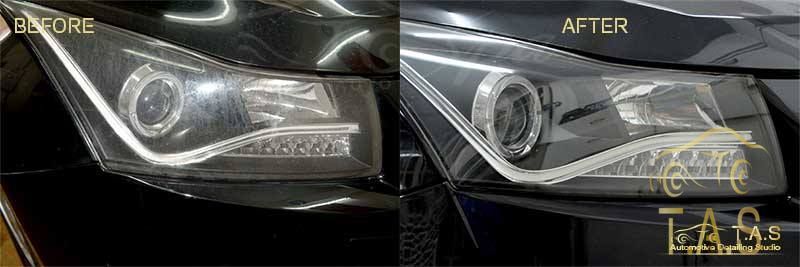
Headlight Restoration
Headlight restoration for oxidized or hazy lenses that reduce night visibility and spoil the car's front-end look.
Tailored Packages for Every Need
Restoration
- Sanding
- Polishing
- UV sealant
Restoration + PPF
- Full restoration
- PPF protection
- 3 year clarity
Note: Package details, features, pricing, and availability are subject to change. Please contact us directly to confirm the latest inclusions, pricing, and slot availability before booking.
Booking note: Prior booking is required for this service. Please contact us in advance to confirm availability and reserve a slot.
Popular Add-Ons
Complete Service Overview
Yellowed Headlights Are a Safety Issue, Not Just a Cosmetic One
Seven out of every ten cars over three years old on Indian roads have some degree of headlight oxidation. Most drivers assume the reduced night visibility is just part of driving an older car. It is not — it is a fixable problem, and the difference in road illumination between cloudy and restored headlights is dramatic.
AAA Foundation research shows that oxidized headlights can reduce light output by up to 75%, cutting effective visibility from 150 feet to under 40 feet at night. That is less than the distance needed to stop at 60 km/h. Restoration brings output back to near-factory levels, and many customers describe the improvement as being like switching from a dim torch to a proper beam.
Why Kerala’s Sun Destroys Headlights Faster
Headlight lenses are polycarbonate plastic — strong and impact-resistant, but vulnerable to UV radiation. The factory UV-protective topcoat on the lens surface wears off within 2-4 years of ownership. Once that coating is gone, Kerala’s intense tropical sun attacks the bare polycarbonate directly, causing oxidation and yellowing that spreads inward from the surface.
The combination of high UV intensity, heat, and humidity in Kerala accelerates this process significantly faster than in cooler climates. A car parked outdoors in Trivandrum degrades faster than the same model kept in a garage or driven in a less sunny region.
Our Restoration Process
Professional headlight restoration is a multi-stage process, not a single wipe-down. At TAS we use:
- Surface assessment to determine depth of damage and feasibility of restoration
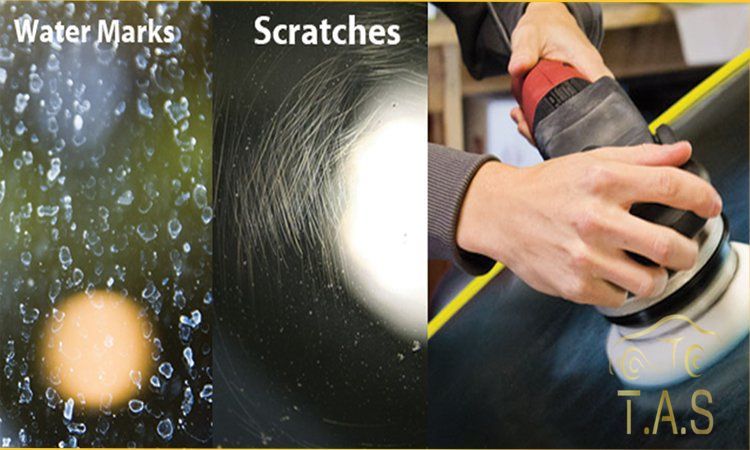
- Multi-grit wet sanding to remove the oxidized polycarbonate layer progressively
- Machine compounding to remove sanding marks
- Machine polishing to restore optical clarity and surface smoothness
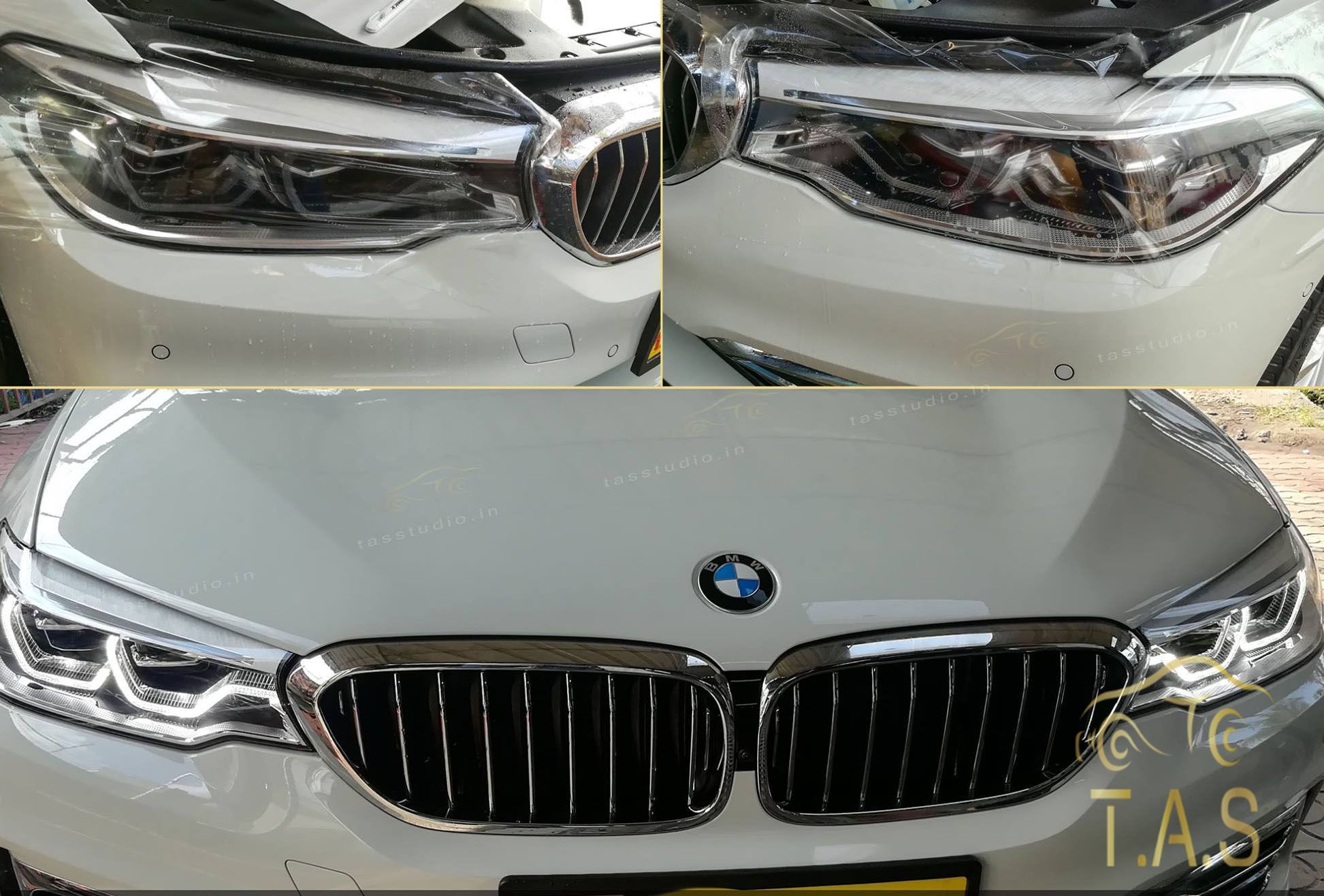
- UV-resistant sealant application or Headlight PPF as a protective topcoat
The process takes 1-3 hours for both headlights and the difference in before-and-after clarity is immediately visible.
Restoration vs Replacement — Which Do You Need?
Restoration is the right choice when the damage is surface-level: oxidation, yellowing, light scratches, and haze on the outer polycarbonate lens. These account for the vast majority of headlight degradation cases.
Replacement is needed when there is internal fogging or moisture inside the housing, cracking, severe impact damage, or delamination of the inner reflector surface. If you can feel a scratch with your fingernail, it is too deep to polish out. We will tell you honestly at inspection which applies to your car.
Protecting Restored Headlights
After restoration, applying Headlight PPF is the single best way to prevent re-oxidation. The film acts as a permanent UV barrier over the freshly polished lens, eliminating the main cause of yellowing. Without protection, oxidation begins returning within 1-2 years in Kerala’s conditions. With PPF, restored headlights maintain clarity for 3+ years — and the film also protects against the stone chip damage that causes permanent pitting on the outer lens.
Best For
- Cars with cloudy or yellowed headlight lenses
- Drivers struggling with weak night visibility despite working bulbs
- Owners trying to avoid expensive headlight replacement
- Cars parked outdoors in strong sun for most of the year
Headlight Restoration Gallery
Common Questions
How badly do yellowed headlights affect night driving safety?
Significantly. Research by the AAA Foundation found that oxidized, foggy headlights can reduce light projection by up to 75%, cutting your effective visibility from 150 feet down to around 37 feet — less than the stopping distance at 60 km/h. Even moderately discolored lights reduce night vision by around 50%. Most drivers adapt without realizing the headlights are the cause, making it a hidden safety risk.
Why do headlights yellow so fast in Kerala?
Modern headlight lenses are polycarbonate plastic, not glass. Polycarbonate is impact-resistant but degrades rapidly under UV exposure, and Kerala's intense tropical sun delivers far higher UV intensity than temperate climates — especially during summer and the post-monsoon months. The factory UV-protective coating wears off within 2-4 years, after which the polycarbonate oxidizes quickly. Cars parked outdoors in Kerala degrade noticeably faster than garage-kept vehicles.
Can I restore headlights myself with a kit from the market?
DIY kits can remove surface yellowing but results are typically short-lived — often 3-6 months — because most kits skip the UV resealing step. Without properly sealing the polycarbonate after sanding, UV oxidation restarts almost immediately. Professional restoration uses multi-stage wet sanding, machine compounding, machine polishing, and a proper UV-resistant sealant or PPF topcoat, delivering results that last 1-3+ years rather than months.
How long does restoration last?
Without any topcoat protection, professional restoration lasts 1-2 years before oxidation begins returning, depending on UV exposure. With a UV sealant, this extends to around 2 years. With Headlight PPF applied on top of the restored lens, results last 3+ years — the film acts as a permanent UV barrier, preventing re-oxidation. We always recommend the Restoration + PPF package for the best long-term outcome.
At what point do headlights need replacement rather than restoration?
Restoration works for surface oxidation, yellowing, and light scratches on the outer polycarbonate lens. It cannot fix cracked lenses, internal fogging or condensation inside the housing, deep impact damage, or delamination of the inner reflector coating. If you can feel a scratch with your fingernail, it is too deep to polish out. We assess every headlight before quoting and give you an honest recommendation — we will tell you if replacement is the better option.
How expensive is headlight replacement on modern cars?
It varies widely. On entry-level cars, replacement assemblies cost ₹4,000–₹10,000. On mid-range cars with projector and DRL units, this rises to ₹15,000–₹40,000 per side. On premium European vehicles with adaptive LED or laser headlights, replacement can exceed ₹80,000–₹1,50,000 per headlight, and insurance typically does not cover cosmetic degradation. Professional restoration at ₹2,500 for both headlights is the far more economical first option when damage is still surface-level.
Will the yellowing come back after restoration?
Yes, eventually — polycarbonate will always re-oxidize under UV without a protective barrier on top. Professional restoration removes the existing oxidation cleanly and a UV sealant slows the return significantly. The best prevention is applying Headlight PPF immediately after restoration — the film permanently shields the freshly polished lens from UV. Without any topcoat, oxidation typically begins returning within 1-2 years under Kerala's UV conditions.
Does headlight condition affect vehicle inspection?
Yes. Motor vehicle regulations require headlights to be in proper working order, and visibly yellowed or hazy lights that significantly reduce beam output can be flagged during inspection. Beyond compliance, heavily degraded headlights that contribute to a nighttime accident can complicate insurance claims, as insurers may note the pre-existing condition as a contributing factor.
Service Videos
Headlight Restoration at TAS
Related Services
Trivandrum Local Guide
Looking for Headlight Restoration in Trivandrum?
Our dedicated local page has pricing, FAQs, and location details for Trivandrum customers.
Ready to Protect Your Car?
Get a personalized quote and expert advice for headlight restoration.